




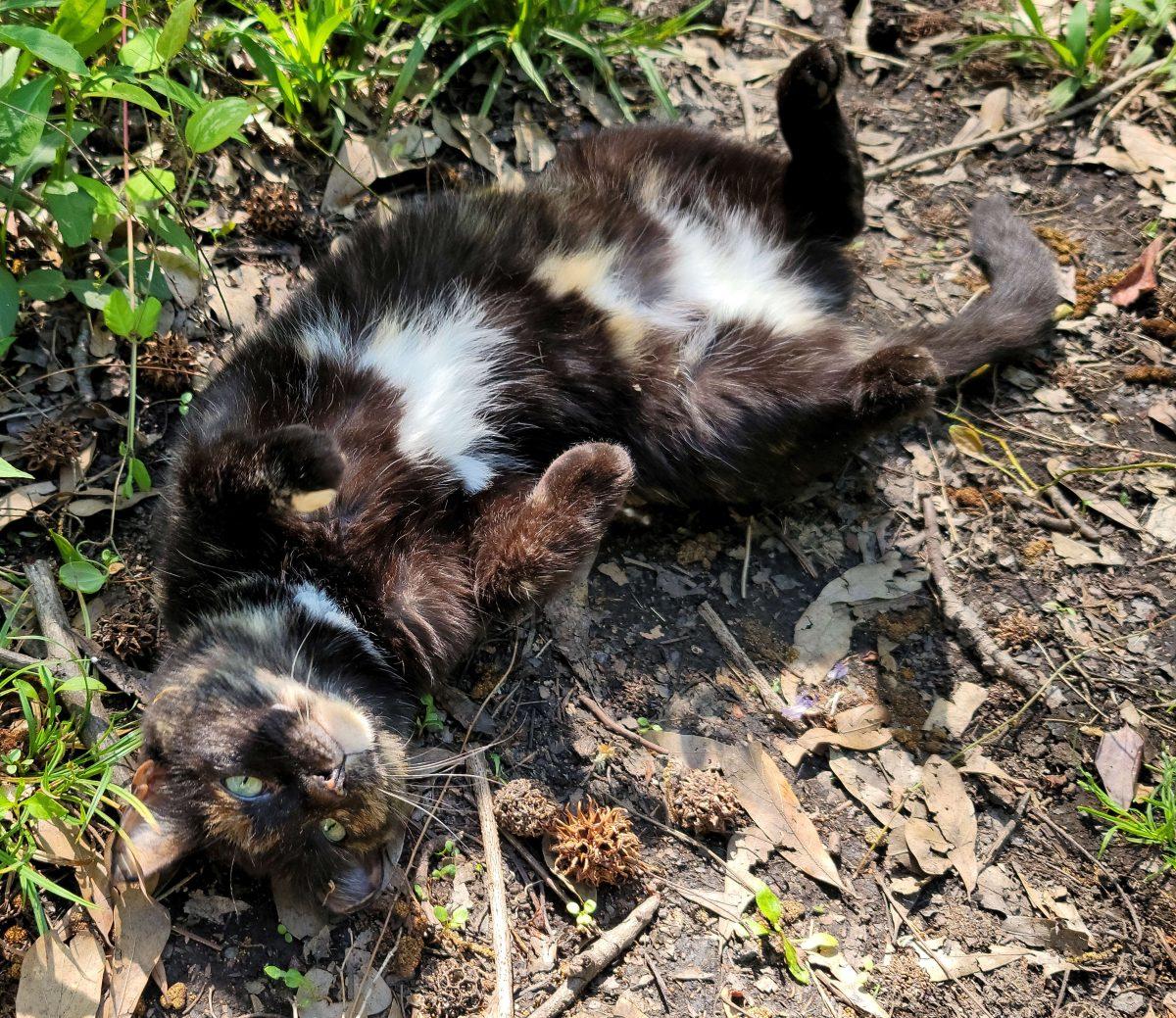
With the help of cat-loving faculty and staff, the campus cat population has been narrowed down to five healthy, quasi-feral felines.
To maintain the well-being of the cats and students, caretakers Vickie McDonald of the biology department and Danielle Kraus of Torreyson Library urge students to treat the small colony responsibly.
Kraus said five cats are currently residing on UCA’s campus, which she and her husband feed daily — even on holidays.
“They have names, probably a lot of different ones to be honest, but the ones I have for them are Fuzzy Wuzzy, Princess, Panther, Butterfinger and BB,” Kraus said.
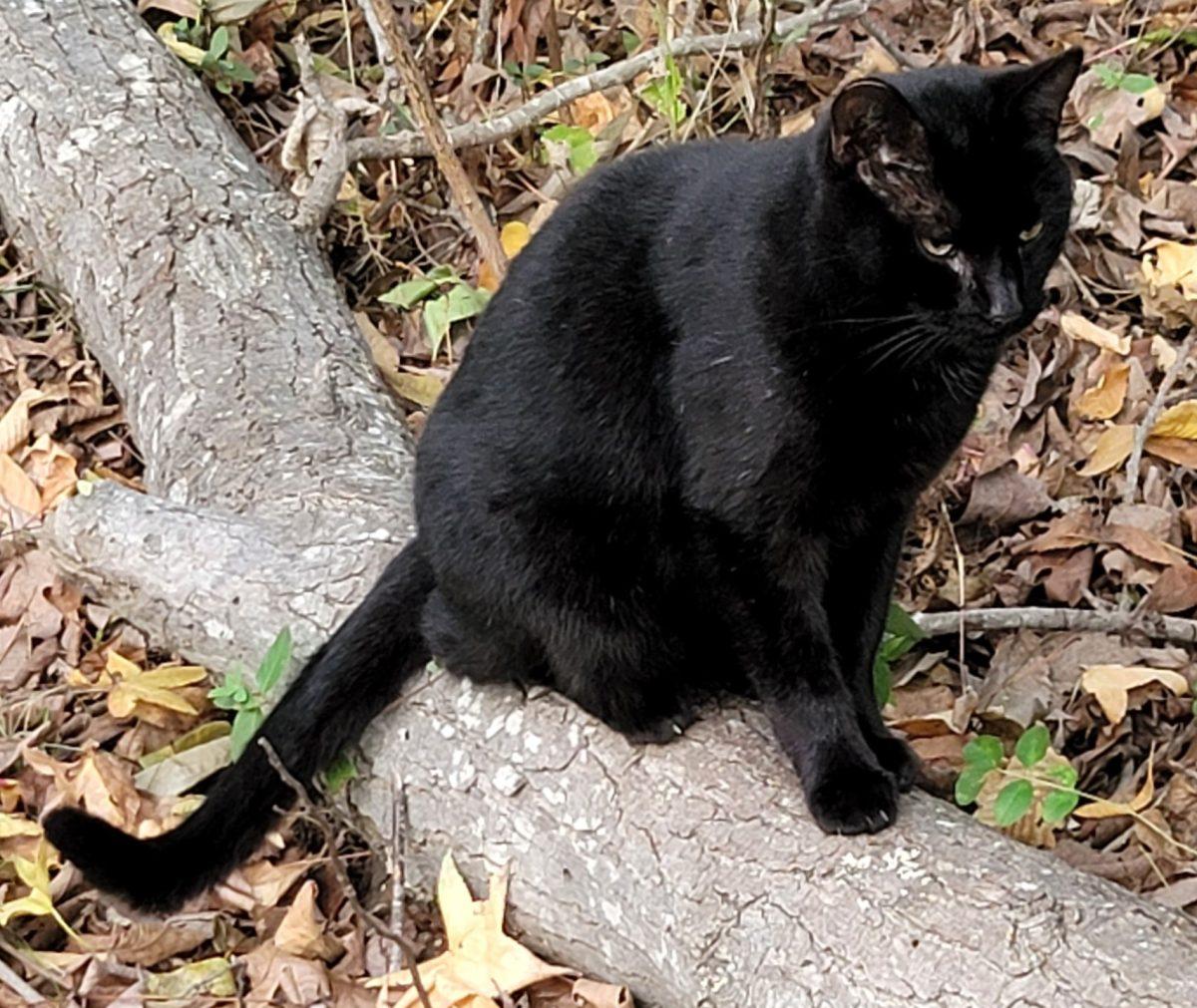
Panther, a black cat, perches on a log.
“All of them are spayed or neutered and no new cats have been born since BB was born in 2020. Fuzzy Wuzzy and Butterfinger are pretty friendly and like to be pet by people they know, but Princess, Panther, and especially BB can be a little more nervous around people, even me,” she said.
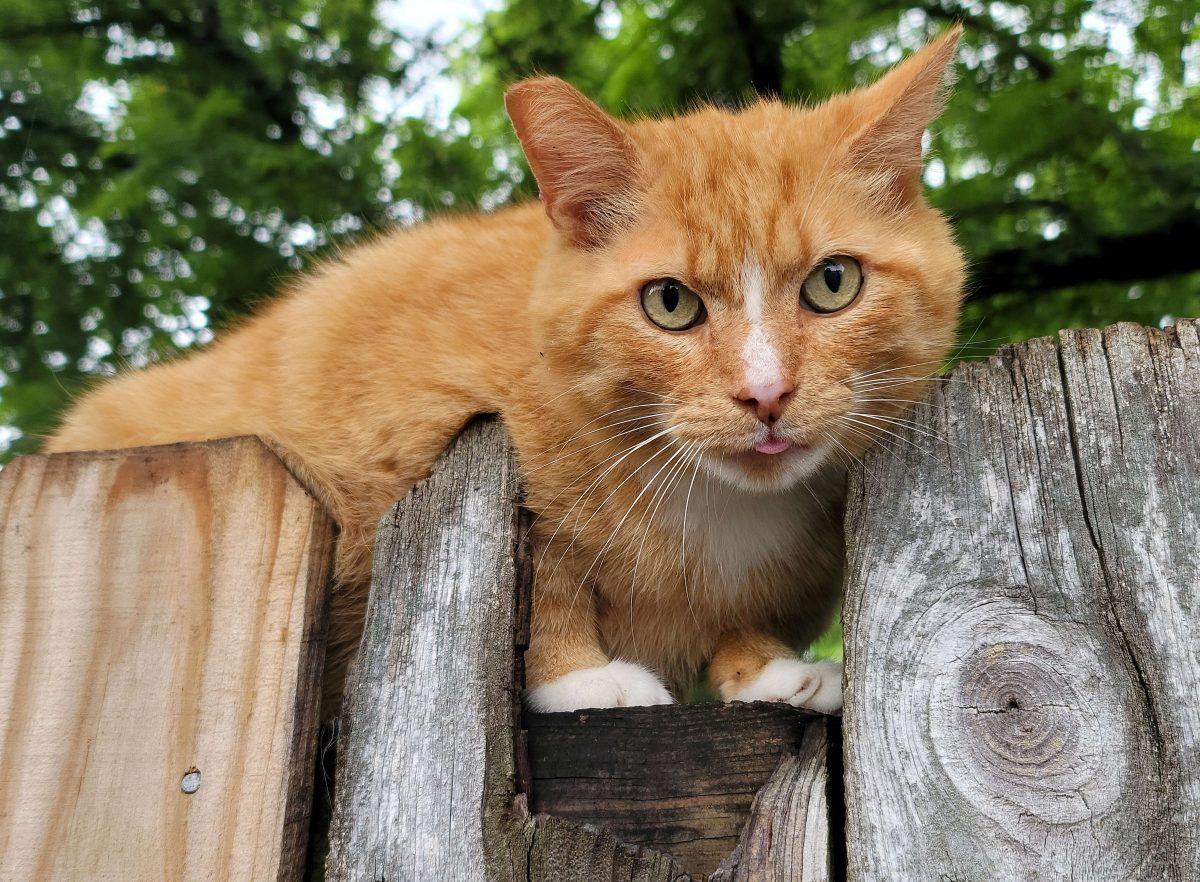
Butterfinger, an orange tabby, peers over a fence.
In the past, the campus cat population has been larger, but thanks to McDonald and Kraus’ trap, neuter and return method, or TNR, and their efforts to adopt out the younger, friendlier cats, the population dwindled.
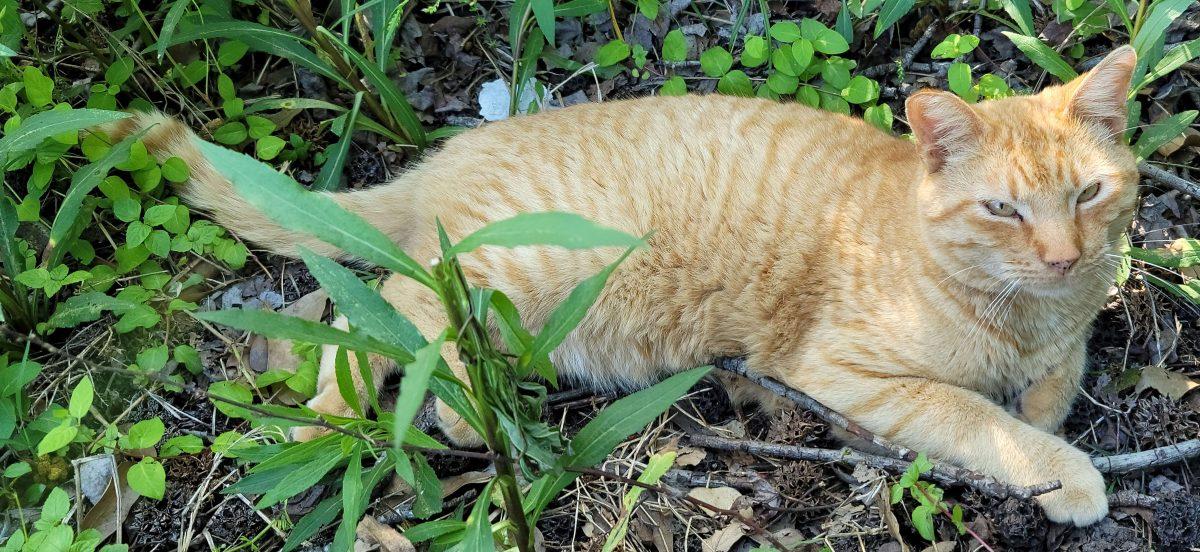
BB, Butterfinger's son, relaxes in the grass.
McDonald said, “The cats come to campus because at some point in history, somebody dumped them or somebody dumped them near campus and they kind of wandered onto campus and they got some food so they came back. And they stay here because they get fed, unfortunately, also get fed by students. I say unfortunately, I don’t want to see any animal starve, but on the other hand, it’s kind of a butting heads with conservationists and even people that don’t like cats with the cat feeders.”
McDonald said she has observed new cats appearing on campus close to the end of the semester.
“Students let cats loose when they have to leave campus. So, between semesters, especially at the end of the spring semester, is a horrible time. The cat population on campus probably grows by 50% and people just turn their cats out,” McDonald said.
“Other instances occur when students that live off campus think, ‘Oh, well, there are cats that live on campus, I’ll just take Cynthia over here and let her loose and she’ll find friends.’ So people actually bring cats to campus sometimes,” McDonald said, adding this was not all that common.
McDonald said the timing of the arrival of new cats, the cats’ friendliness towards people and their desire to be near dorm entrances lead her to believe students may dump their cats on campus when it is time to go back home.
When new cats arrive, McDonald and Kraus work to get them caught and vetted so they may be adopted.
Kraus said, “You’ll find a lot of TNR advocates like myself are just trying to create a solution to a problem that the cats themselves didn’t cause. Unfortunately, the root cause is people who get a very cute kitten or cat without realizing how expensive that really is and have no plan in place for the long-term care of that animal.
“They often end up abandoned outside, and without being spayed or neutered. These cats then go on to make a lot more cats who just don’t know how awesome it is to live inside and are scared of people.”
“TNR is a humane way to make sure those cats are allowed to live out their lives without compounding the problem with even more cats. To me, this has been the best plan so far, with the end goal being there wouldn’t be any more cats on the streets, including campus,” Kraus said.
The five long-term campus cat residents are expected to be around for life.
Kraus said, “The cats are bonded as a group, so splitting them up to adopt the friendly ones would cause them all a lot of trauma and stress, so the most humane thing is to let these cats live out the rest of their days together. It’s about being kind to the cats by caring for them, but making sure that the long-term goal is that no more future cats have to live their life outside.”
McDonald, who teaches ornithology, said she recognizes wild cats can pose ecological damage to native bird populations, but with the small size of the UCA cat population, they were likely not causing notable detriment.
“If you’re keeping the cats well-fed then they don’t have that much of a propensity to go after the native wildlife,” McDonald said.
McDonald said the most prominent threat to birds on campus is the windows of Torreyson Library, which confuse birds with their reflective tint.
McDonald said while the campus cats look friendly she discourages students from trying to feed them.
“Dealing with cats one needs to take a perspective of they’re wild animals, in a sense, even though they look pettable,” McDonald said.
“You need to think about who owns them, who’s responsible for them, who would be responsible if a student got bit, for example, and that type of thing. So, there are broader reaches rather than just sort of thinking they’re cute and cuddly and let’s take care of them,” she added.
Kraus said, “I do want to assure [students] that the Lewis cats are being fed every day by me and my husband — even weekends, holidays, and breaks. They are well-taken care of, so please don’t worry, they are excellent actors at pretending they are hungry for extra snacks, just like most cats.”
Kraus said all the funding for feeding the cats is from donations or her own pocket.
“I really encourage students who would love to play with adorable cats to look into cat cafes or even sign up to volunteer with a rescue or shelter. There are definitely a lot of places looking for foster homes where all the vet bills are paid. The student just loves and cares for a cat while it waits for its forever home,” Kraus said.
McDonald is also the co-founder of the non-profit cat rescue organization CLAWS: Cat’s Lives Are Worth Saving. To find out more, visit clawscatrescue.org.