



As a mathematics major with a passion for art, I usually enjoy exploring the interdisciplinary implementation of the two fields. Science, technology, engineering and math concepts exist all throughout art, whether it be through the chemistry of artistic mediums, the physics in architecture and sculpture, or the mathematics of linear perspective and the Fibonacci sequence.
However, one of the most recent advances in this interdisciplinary relationship has been a more concerning one to me: the rise of art produced by artificial intelligence.
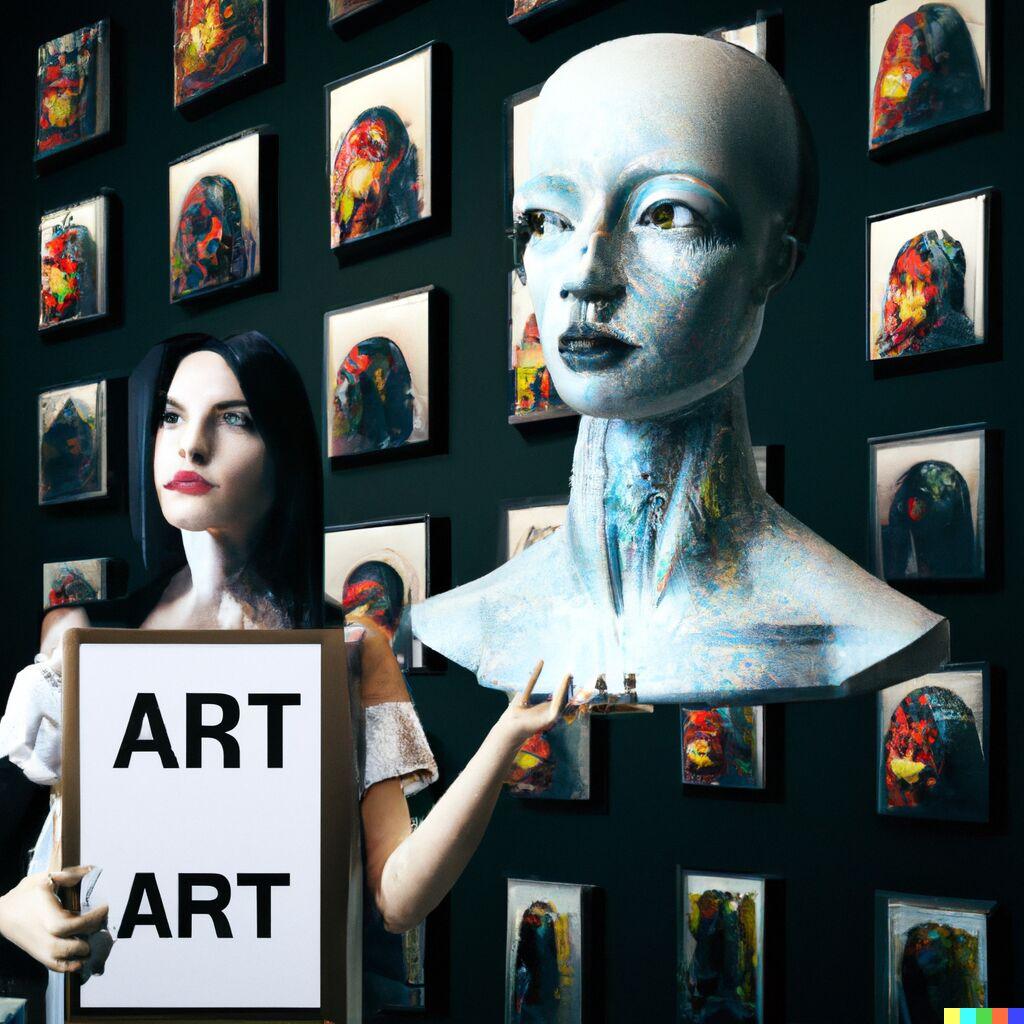
Given a prompt and as little as 10 seconds, AI software is able to create works of art nearly unrecognizable as being computer generated. Further, AI continues to adapt as more and more data is fed to it. Due to what some think is the misuse of artistic data available on the internet, The New York Times said, “people…claim that these apps are essentially a high-tech form of plagiarism.”
With such easy access to this medium that requires only the ability to curate prompts, the necessity to commission humans to do this same work could eventually seem unnecessary. Why continue to hire graphic designers, architects, visual artists, etc. if their work could be mimicked by software?
This may seem over-reactionary, but consumer trends following the mechanization of the food and fashion industry over the past hundred years have reflected a similar process.
Food artistry became obsolete when advancements in agricultural techniques allowed the transition into the fast food era by increasing farm yields, preservation and allowing for formulaic preparation of meals. In the age of fast food, food artisans — whether they hail from small-town farms using organic practices, or chefs with exotic recipes — have turned into a luxury for those who can spare the money.
The fashion industry took a similar path when large companies combined mass production, low wages and formulaic designs. Consequently, consumers swarmed to get more products for less even if they knew the product would be lower quality and less ethical. With the quickness that fast fashion offers, homemade garments or clothes from smaller businesses are often seen as an expensive luxury.
With the progression of fast fashion and fast food in mind, I worry that our consumption of art may, too, soon become a thoughtless commodity. Are we now moving towards an age of fast art?
While the progression of AI’s capabilities has advanced swiftly, I think it is important to remember what this art lacks that the human artist still provides. Human artists are still unique in that they are able to create novel content. AI is limited in that it is only able to mimic the trends and existing artwork data that it receives.
Americanscientist.org said, “You could argue that the resulting images aren’t all that interesting: They’re really just imitations — with a twist — of pre-curated inputs.” Where the artist can be compelled to create for a number of reasons, AI can not conceptualize what or why it creates.
Because humans provide art with emotional and social context that AI can not yet comprehend, humanity remains a necessary aspect of artistry, and AI applications account for just another art medium at our disposal.