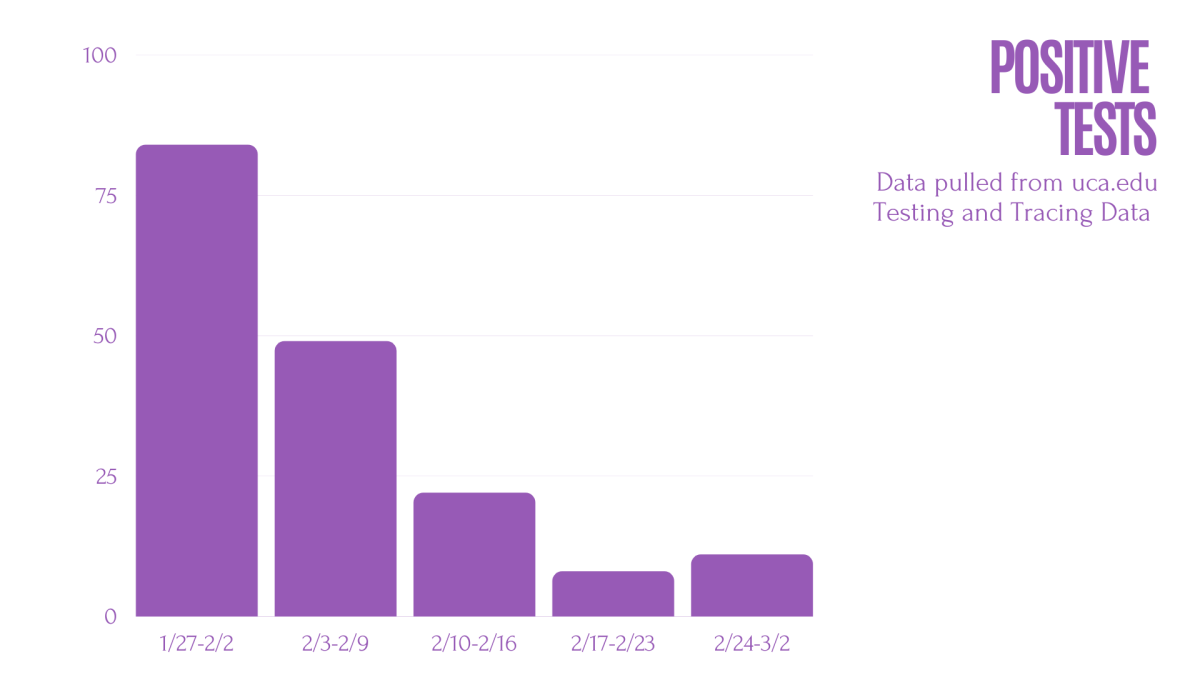



UCA made masks optional in all campus spaces beginning Monday, Feb. 28, despite the Center for Disease Control still listing Faulkner County as having a high level of community transmission.
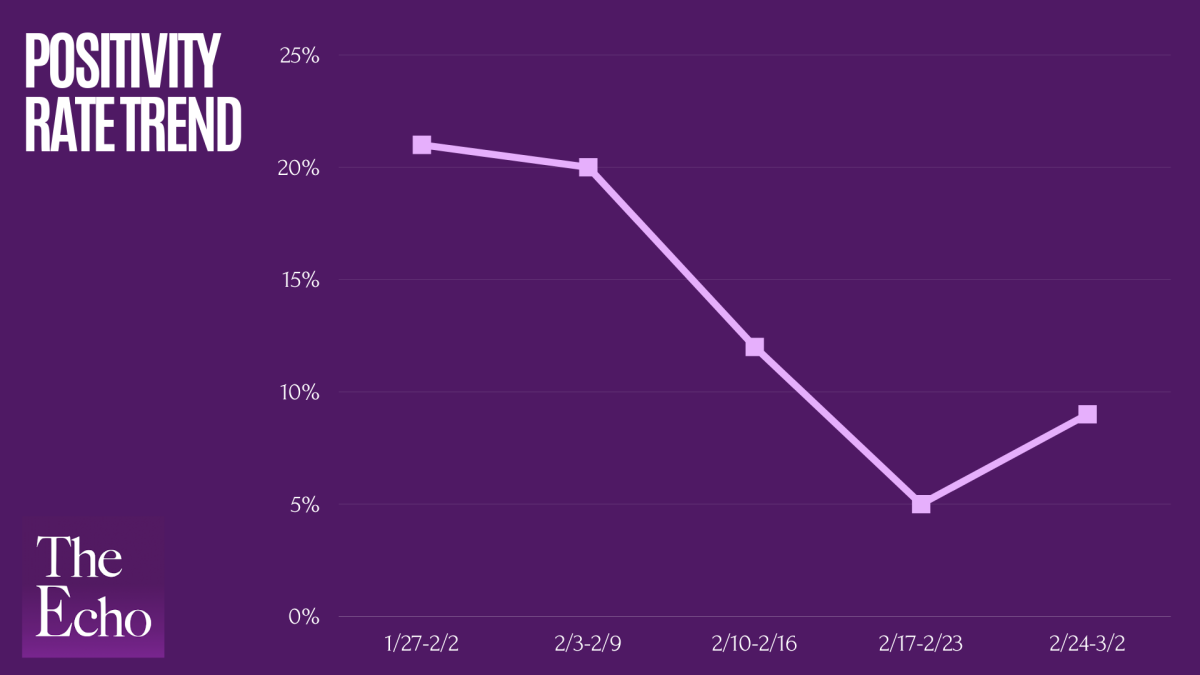
In an email from the UCA President’s Office, Houston Davis said, “This guidance takes into consideration several variables, such as trends in campus positivity rates and case numbers, local hospitalizations, and campus demand for isolation housing.” The same metrics used from May 2020 through August 2021 were used to come to this decision, Davis said in the email.
According to the CDC website, it is recommended for those in counties with high levels of community transmission to wear a mask, stay up to date with COVID-19 vaccines and get tested when experiencing symptoms.
The website says that those at high risk for severe illness may need to take additional precautions. Some professors now have to face the predicament of having students in-person when some are immunocompromised.
Schedler Honors College professor Adam Frank said he asked students to voluntarily continue to wear masks in the classroom due to one seriously immunocompromised student. “I will continue to wear a mask indoors until our campus positivity rate drops 2% or less for a full week. That’s a personal choice,” Frank said.
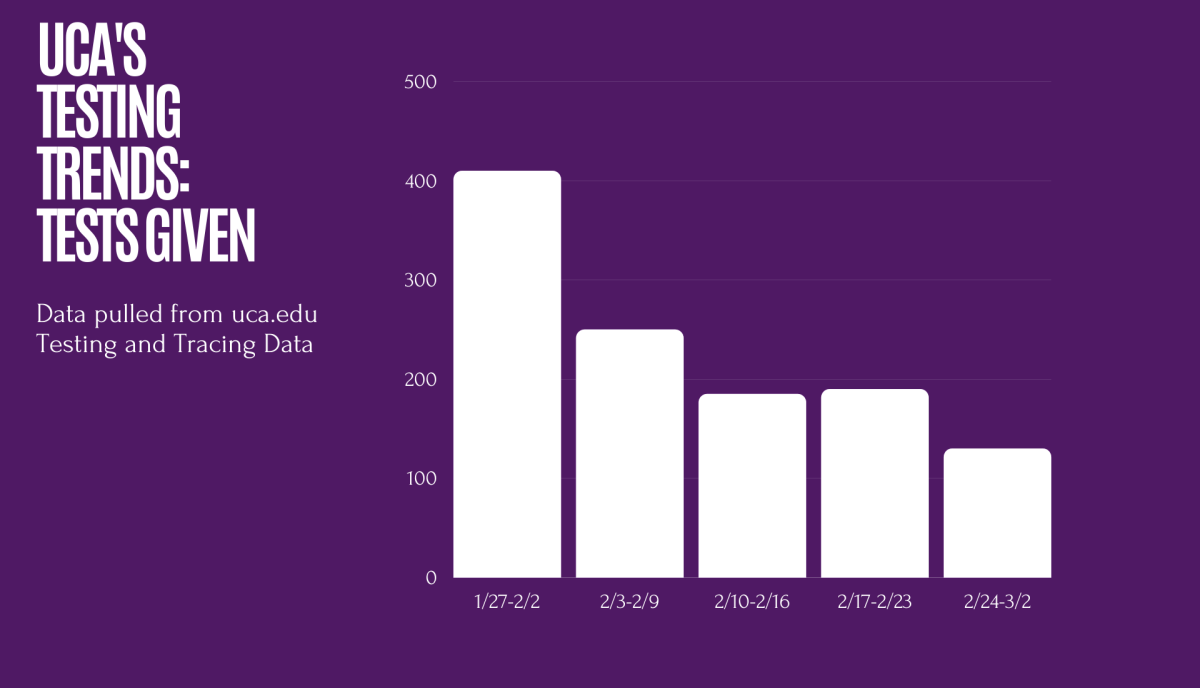
As of Feb. 23, UCA’s testing and tracing data — available at uca.edu/coronavirus — displays a positivity rate of just above 6%. During the entirety of 2021, UCA never reached a positivity rate of 5%. The highest positivity rate was in September of 2020 at around 5%.
A recent poll on The Echo’s Instagram asking students what they thought about the new mask policy resulted in 40% in favor of the decision, while 60% disagreed.
Freshman Garrett Hobbs said he was fine with the new mask guidance. “I personally wear [a mask] during classes but don’t wear them while I’m in the cafeteria or in the Student Center,” Hobbs said.
Masks are still available in campus buildings for those who wish to wear them, and KN95 are available for free by request.
Linguistics professor Patrick Thomas said that he does not wear a mask in the classroom a lot of the time, since it is helpful for students to see what he is doing with his mouth. He said that he sticks to the guidelines for instructors to remove their masks when far enough away from students. “Sometimes there will be a student or two that rushes to the front of the room with a question immediately as class ends while I’m struggling to put my mask back on while they’re in my face, and that sometimes makes me a little uncomfortable,” Thomas said. Going forward, Thomas said he plans to keep a mask on him for when he thinks it’s necessary but will probably continue without a mask.
Davis said in the email that the wide availability of testing and vaccinations — among other things — provides individuals with the resources they need and to make decisions for their personal health.
Senior Kate Johnson said she would continue to wear a mask on campus. “I think the updated policy came a little too soon, numbers haven’t dropped enough in my opinion to make the call of optional masks,” Johnson said.
In the email, Davis said, “UCA will continue to monitor and respond to changing conditions.”
Davis said he knew the guidance would be met with mixed reactions and that the community will continue to respect individual’s decisions.