


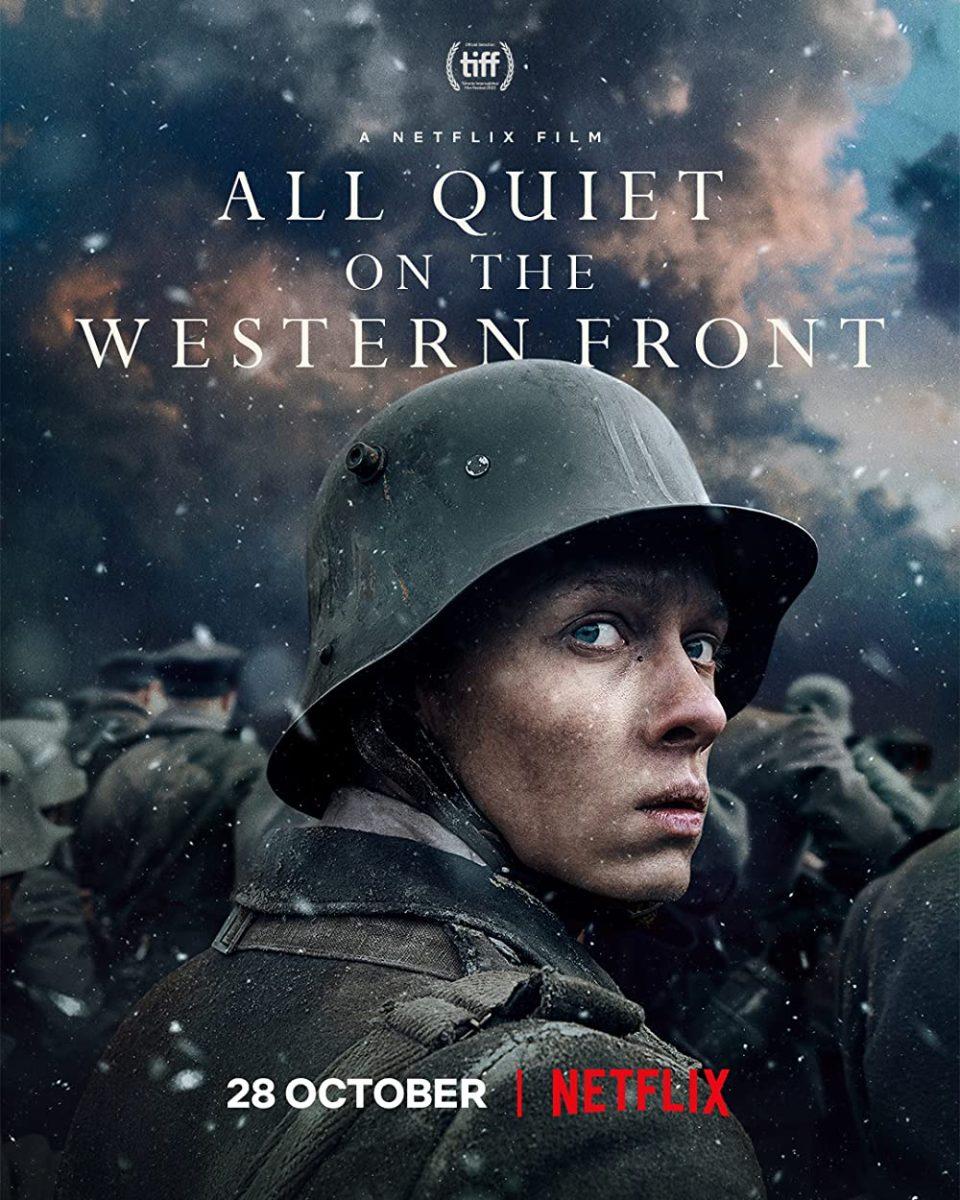
“All Quiet on the Western Front” breathes new life into the war genre, providing a harrowing tale of brutality and camaraderie.
The German period film stars Felix Kammerer, Daniel Brühl and Albrecht Schuch, with direction by Edward Berger.
The adaptation of the 1929 novel follows Paul Bäumer (played by Kammerer), a 17-year-old who enlists in the German army with his friends at the tail end of World War I.
As Paul faces death and forms new bonds, his psyche and world begin to crumble, questioning if his country is worth his life.
“All Quiet on the Western Front” is one of 2022’s most difficult films to watch.
With graphic depictions of war violence, heart-wrenching deaths and prolonged scenes of panic, the film never gives you a moment to breathe, twisting the blade with every chance it gets.
Whereas many war films like “Hacksaw Ridge” focus on the heroics of war, Berger’s movie does the exact opposite.
There are no scenes of patriotic bravery or valor.
Every moment on the battlefield is anxiety-inducing, as you hope for the survival of the main characters, a plea that you know won’t be heard.
The script’s understanding of the human condition helps ground its simple story far more than other war films.
Berger injects themes of anti-war and class warfare in his action scenes while placing slivers of levity and friendship throughout, such as singing along at dinner or fawning over girls who cross paths with the soldiers.
Although these humorous scenes let us connect with the lead characters, it also acts as a double-edged sword, making the deaths of several of these comrades more challenging to watch.
Kammerer and Schuch give the film’s best performances, having strong chemistry as they bond throughout the war, trusting each other with some of their darkest secrets.
It’s because of the actors’ subtle nuances and unique character choices that their friendship feels authentic.
Even with a story that engages audiences and elicits strong emotions, the film still stands tall with its technical marvels alone.
Cinematographer James Friend finds a perfect balance of intense, taut shots during scenes of warfare or stillness.
Even within these quieter scenes, Friend’s shots create a boiling atmosphere, unsure of what a character is about to say or do.
The film’s use of natural lighting blends the cinematography into the world, making the audience feel that they’re in the trenches with these characters.
The earlier scenes are drenched in muddy blue skies and earthy browns, supporting the realism of the war scenes while casting a depressive shadow across everything.
Later segments are covered in burning oranges as fires roar, creating both a sense of victory and unease.
These colors and shots are given beautiful backdrops with the natural landscape of Prague, as well as historically accurate production design, helping immerse the viewer even more.
As history has continued, more wars have been fought, and technology has progressed, Edward Berger proves that value can still be found in this story even after nearly 100 years.
“All Quiet on the Western Front” was released on Oct. 28 and can be streamed on Netflix.