

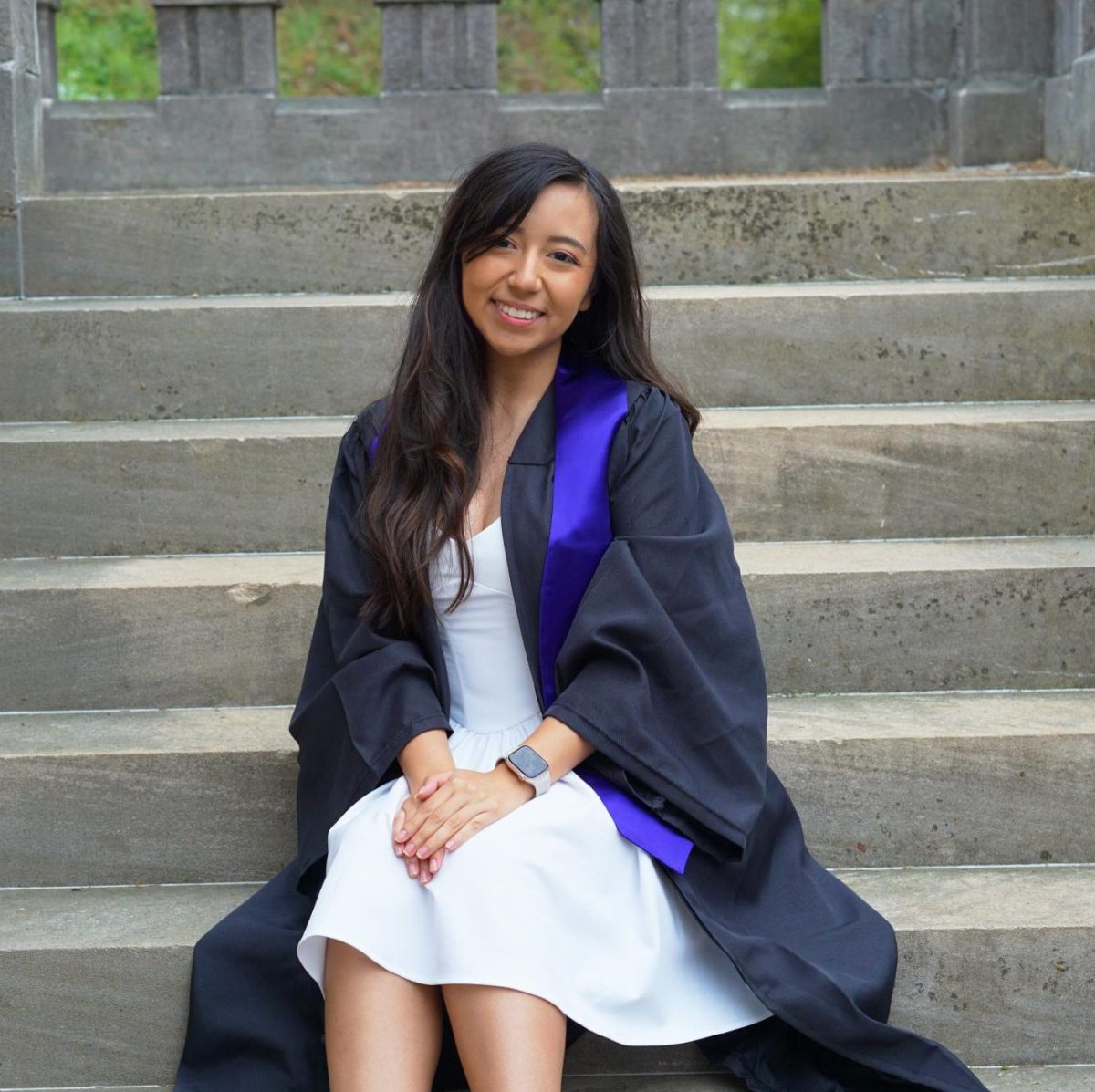
After dedicating a year and a half to her master’s thesis, University of Central Arkansas computer science alumna Amber Abernathy’s hard work paid off monumentally.
Her thesis, titled, “The Application of the Incremental Online K-Means Algorithm and its Application to Color Quantization,” was published in Expert Systems with Applications, a top-ranked prestigious journal.
The thesis explores the application and use of an algorithm introduced by Abernathy and her supervisor, professor and chair of the computer science and engineering department, Emre Celebi.
“The publishing was officially confirmed after I graduated in May 2022,” Abernathy said. “Although it was my first attempt at getting published, I did not think the paper would be denied. I was very happy when I received the news, but not surprised considering how much time and effort Dr. Celebi contributed in assisting me,” Abernathy said.
Celebi, who supervised Abernathy through the entire process, said, “Amber’s thesis concerns data clustering, a subfield of data science. Data clustering is the unsupervised classification of patterns into groups.”
“The primary goals of clustering include gaining insight into, classifying and compressing data,” Celebi said. “Amber’s thesis proposes a novel data clustering algorithm and applies it to colors in natural images. Her thesis was interesting because the proposed algorithm was simple, deterministic, fast and effective. It is rare to find an algorithm that combines all of those qualities.”
As a lifelong fan of math and science, Abernathy found her perfect fit in computer science. “I did not take my first computer science or coding class until my first day in the computer science department at UCA,” she said. “It ended up being perfect for me.”
“The computer science department built me up for this accomplishment to have been possible,” Abernathy said. “Everyone was always so supportive and helpful.”
Abernathy began the research for her thesis during the summer of 2021. What she presumed to have just been a summer job with Celebi turned into the “perfect opportunity” to tackle her thesis, Abernathy said.
“After doing the research over the summer, I felt like I had a much better understanding of color quantization and data clustering algorithms. It only made sense to write my thesis over the research,” Abernathy said. Once the decision was made, Abernathy began building her code and reviewing academic journals relevant to her thesis.
Celebi’s work as her research and thesis adviser helped Abernathy stay on track once school started back in the fall. “He would double check any data or analytical results we had,” Abernathy said. “When writing the paper he helped me format the document correctly, and also helped me regarding the lingo.”
Abernathy focused on writing the thesis paper and presentation during the 2021-22 academic year.
“The entire process was physically and mentally draining, but no more so than a regular class. Even so, I still felt so proud when I finished,” she said.
Through the stress that comes with building a thesis, Abernathy felt pride in herself for concluding her thesis as a Black woman in the field of computer science. According to Women and Girls of Color in Computing, only 7% of all women employed in computer and information science occupations are Black.
“The work is hard, and I did not want to disappoint myself or anyone,” she said. “But at the same time, I could not allow myself to only focus on any scary possibilities or the fact that I could be in a less favorable position due to being a Black woman.”
“Even if the odds may have been against me, I still did it,” Abernathy said. “I was more proud of myself in the end because of it.”
With her eyes toward the future, Abernathy remains hopeful for more opportunities in learning. “I plan to continue building my resume with professional experience. I would be pretty interested in doing more research in the future if the opportunity presents itself. I’m fine with one thing at a time for now, though.”
“I still cannot believe that my name is on an official scholarly journal that other students will cite for the unforeseeable future,” she said. “It’s crazy, especially because I never dreamed of publishing any writings.”