



-
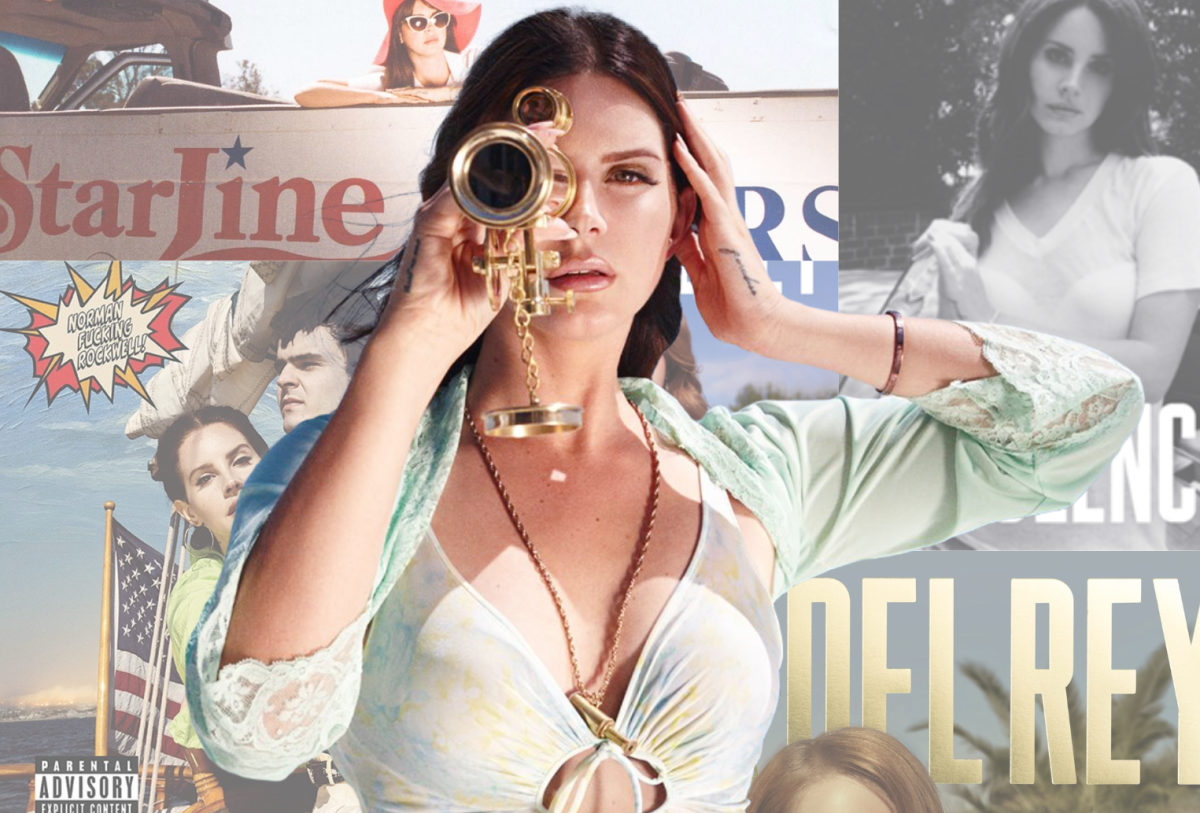
“Ultraviolence” is Lana’s rockiest and most definitive, although steeped in naiveté and irony. The title track, one of her most controversial, drew critiques of glamorizing abuse and was mostly overshadowed by the soft rock crowd favorite, “West Coast.” Lana spins the tale of loving a man who she admires but cannot fully hold onto. Lana’s songwriting centers on loving men and what their love makes her: “When he calls, he calls for me, and not for you.” Stronger in the first half, the songs become whinier and less fully fleshed as the album wraps. This album was a PR disaster and my all-time favorite.
-
“Born To Die,” Lana’s breakout album, is her most theatrical and produced. The orchestras, that signature snare and the big budget music videos with her pretend tattooed lover are indulgent and irresistible. This album takes the most dramatic emotions your teenage brain ever had and makes them into background music for falling in love. Lana sings in “Lolita,” “Look at what I bought, not a second thought, Oh Romeo.” The album is intentionally faux-naif, similar to Melanie Martinez’s “Cry Baby” or Marina and the Diamond’s “Electra Heart.” Enjoying this work requires a suspension of disbelief.
-
“Honeymoon” is Lana’s most underrated album. Sonically, it is the most beautiful thing she has ever released. The lyrics here are some of her most honest; “Religion” creates a pit in my stomach every time I listen. The draw of Lana here is her admittance of obsession, getting the blues and, chiefly, being secondary. Work on the album began before her whirlwind Italian lover publicly dogged her and cheated. The album leads with the tenderest of frightening affection and ends with the somber pleading for understanding. This album has no skips; I even enjoy the T.S. Eliot interlude.
-
It took me three years to finally listen to “Norman Fucking Rockwell!” and I honestly cannot believe I lived so long without it. Lyrically, this is Lana’s best work. She experiments successfully with folk, soft rock and plain pop. The crowning jewel of “NFR” is “Venice Bitch,” a nearly ten-minute track that metamorphosizes Lana’s gentle affection. She laments burnout, sobriety and complex love in and out of almost every track. Lana sheds the usual naiveté needed to appreciate her music and presents her most modern and raw takes. She was snubbed on award nominations.
Story continues below advertisement -
“Paradise” is Lana’s first commercial debut and was included in the sales of “Born to Die,” tacked onto the end, and called the paradise edition. Overshadowed and underrated, this album is conceptual and plays like theater. This is Lana’s voice at its most sultry and her aesthetic at its most Americana. “Paradise” has difficulty taking up space in the modern zeitgeist as its lyrics and visuals can easily be misrepresented and misunderstood. My favorite track from this album is “Yayo,” a ballad narrated by a shaky and airy Lana, which is soulful, jazzy and the heart of “Paradise.”
Categories:
Top 5 Lana Del Rey albums