




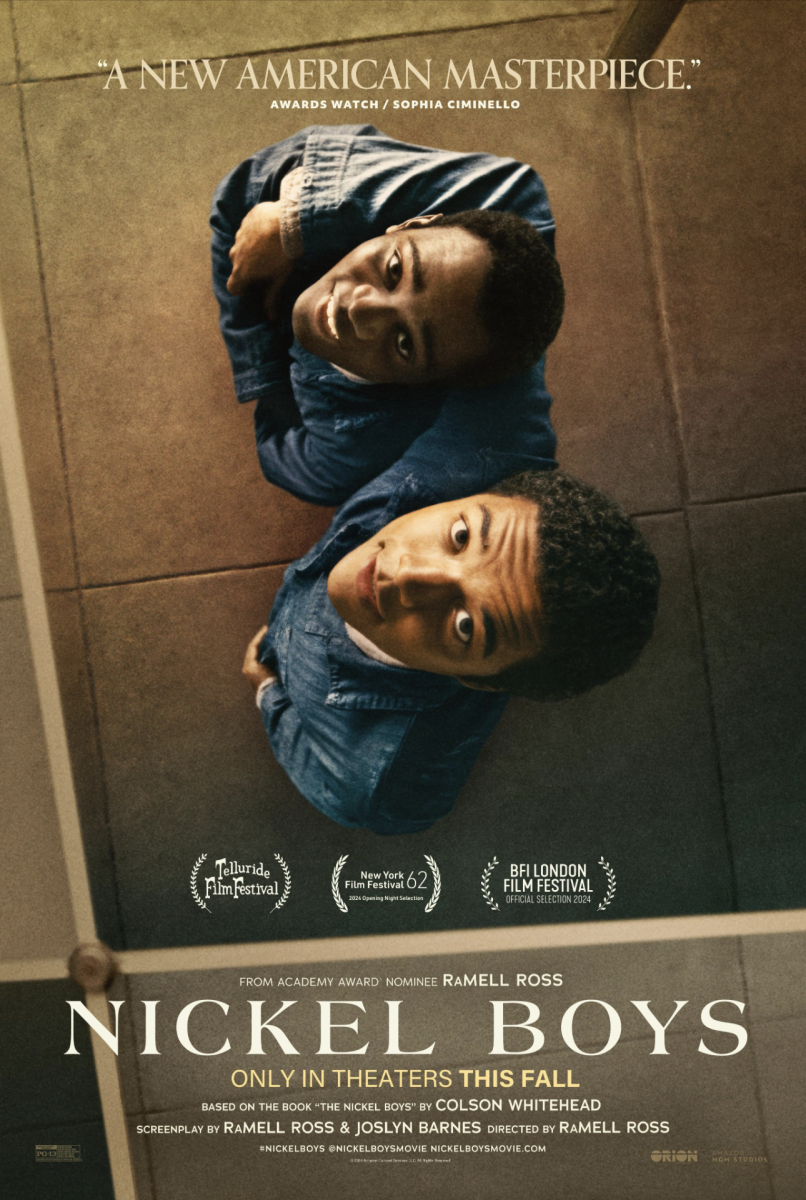
Dauntlessly directed, RaMell Ross’s narrative debut “Nickel Boys” lives and dies through its first-person perspective, giving viewers an unparalleled, gut-churning eye into the Jim Crow era.
After being falsely arrested, Black 17-year-old Elwood Curtis (Ethan Herisse) is forced into Nickel Academy, a reform school located deep within a Floridan forest. While attempting to find his way out, Elwood meets Turner (Brandon Wilson), another student at Nickel who has learned the ins and outs of surviving at the academy. As the teens form a deep friendship, they begin to rely on each other during the height of the Civil Rights Movement.
Combining narrative storytelling with his history in documentary filmmaking, Ross has not only adapted a Pulitzer Prize-winning novel with grace but has produced one of the most harrowing films of the decade.
Archival footage of alligators, the New York marathon and the space race flash against scenes of Turner and Elwood’s mundane, yet fearful life. While these images may appear to be random to the naked eye, they simplify “Nickel Boys” down to its most common attributes: trauma, inequality and childhood innocence. America breaks through every technological advancement for the sake of progress as the aspirations of young children are buried six feet under due to the color of their skin.
In an era when the highest-grossing films of the year have a budget of at least $100 million, “Nickel Boys” proves that massive price tags aren’t needed to revolutionize the film medium.
Although the first-person perspective takes time to warm up to, it becomes all encompassing by the end, transporting viewers directly into the story unfolding. The unconventional cinematography seamlessly merges with the film’s bizarre yet reassuring editing. Ross puts Turner and Elwood’s relationship front and center, giving viewers ample time to grow fond of their playful jokes and bickering attitude. The continual bonding washes nostalgia and comfort over the audience, only for the air to turn cold and bitter as Nickel Academy looms overhead, sending a stark reminder of why the pair are here in the first place.
The distinctive style behind the camera whirls into a hurricane of flawless dread in the film’s final 10 minutes. The gripping narrative reaching its razor-sharp climax alongside Ross’ anxiety-ridden filmmaking leads to one of the most pensive endings in quite some time.
While much of “Nickel Boys”’s DNA resides in its technical mastery, the heart and soul of the film belongs to Herisse, Wilson and Aunjanue Ellis-Taylor, who portrays Elwood’s aunt/guardian Hattie. Herisse may primarily be the lens through which the audience discovers Nickel Academy, but the childlike wonder that has yet to be stolen from him gives the movie its emotional edge. Herisse finds the perfect balance between playing a boy in his final year of adolescence and a man beginning to experience the horrific nation that humanity has created for him.
Luckily, Wilson’s Turner brings levity and solace to the film’s solemn story. His humor is never overbearing, giving audiences just enough time to breathe until they’re dragged under once more.
However, it’s Ellis-Taylor’s turn as Hattie that keeps the film grounded, both in its darker subject matter and its brief moments of joy. It’s rare to find a character who superbly elicits joy, humor and heartbreak, yet Ellis-Taylor fills this void.
Ross’s narrative debut unites documentary stylings with strong storytelling, not only transcending the film medium as a whole but offering one of the decade’s most profound tales yet.
“Nickel Boys” is in theaters now and will be released on Amazon Prime Video at a later date.