



As if Paul Thomas Anderson was unsatisfied with his previous body of acclaimed work, the distinguished director managed to establish himself as the standout artist of his generation with “One Battle After Another.”
The multi-layered film puts screwball comedy, action and political satire into a fast-churning blender that holds the viewer’s attention despite the lengthy runtime.
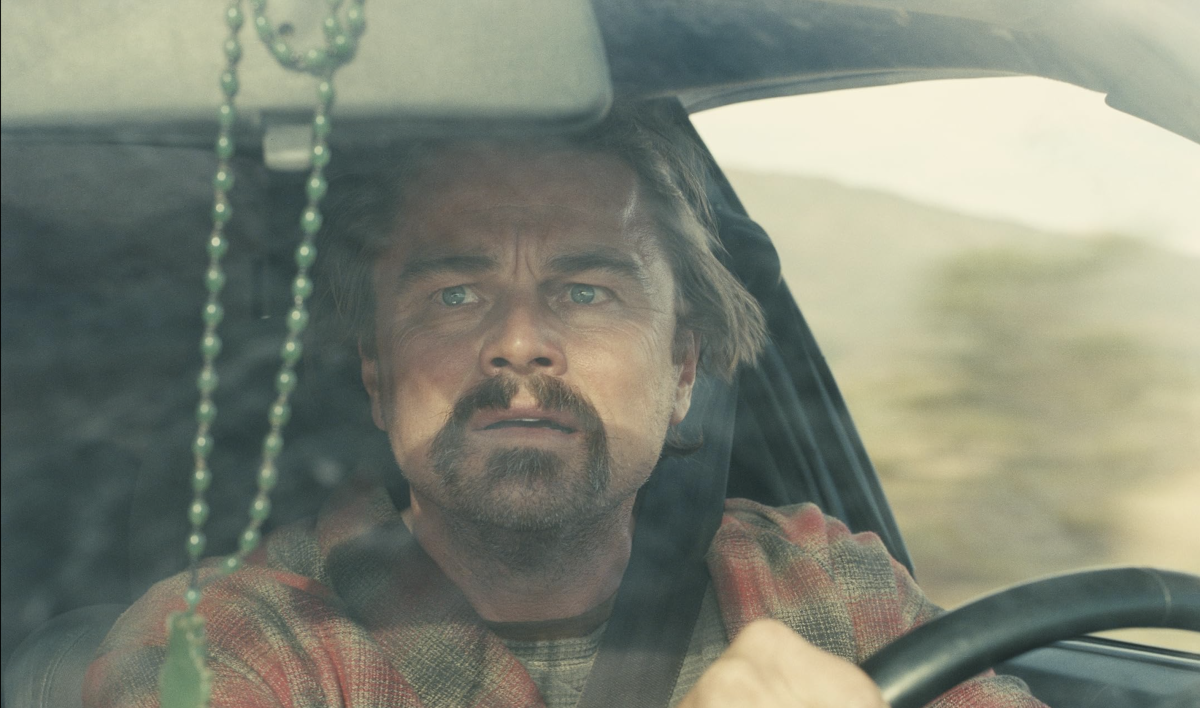
The film follows washed-revolutionary Bob Ferguson (Leonardo DiCaprio) as he races to save his daughter (Chase Infiniti) from vengeful colonel Steven J. Lockjaw (Sean Penn).
While DiCaprio delivers another big-time performance, Sean Penn is the film’s standout.
Penn, playing the corrupt yet deeply idealistic colonel, delivers a comedic performance through a combination of deadpan delivery and bubbling intensity.
At any moment, Penn’s character looks as though he’ll burst a blood vessel while still delivering some of the film’s funniest lines.
Benicio Del Toro once again takes advantage of his natural likeability to give a stellar performance and Chase Infiniti plays Bob’s daughter Willa to a tee.
Additionally, Teyena Taylor takes advantage of her limited screen time to deliver an enthralling performance as fervent revolutionary and reluctant mother Perfidia Beverly Hills.
Anderson’s direction remains as sharp as ever – with the film taking advantage of both expansive wide shots and claustrophobic close-ups.
Though, the most impressive of Anderson’s camera-work came in the final chase scene – where the director took advantage of steep, hilly California backroads to create up-and-down movement which practically feels as though the audience itself is being dragged along the hot pavement.
Another standout of the film is its soundtrack, which was composed by Jonny Greenwood of Radiohead fame.
This was the seventh score Greenwood had composed for a Paul Thomas Anderson film and it meshes seamlessly with the film’s visuals.
The soundtrack contains well-known hits like Steely Dan’s “Dirty Work” and Tom Petty’s “American Girl”, along with a brief but welcome appearance of Sheck Wes’ “Mo Bamba”.
Complementing this is a seemingly infinite piano track which feels almost like wheels moving scenes forward, alongside a bombastic brass section saved for Col. Lockjaw himself.
The film’s themes of political unrest, creeping facism and immigration place it both in a time capsule of the current United States while also keeping it fresh and original.
Anderson manages to deliver social and political commentary in a way that never feels hamfisted or preachy.
One of the film’s best strengths is how it never takes itself too seriously.
While it covers heavy topics, it’s also able to acknowledge the absurdity – keeping the mood light.
While its shots, set pieces and performances are all brilliant, its comedic structure is its greatest feat.
“One Battle After Another” is able to use deadpan delivery of the most absurd lines and mesh it perfectly with the more blatant Leo crashout moment. There are also instances of physical comedy.
The mix of both heart-pumping actions with side-splitting comedy keeps the audience engaged – on the edge of their seat for what could come next.
While many may have thought Anderson had completely shown his artistic hand with films such as “Boogie Nights” or “There Will Be Blood”, “One Battle After Another” shows the director still has plenty of cards left to play.