




5. ‘Gladiator’: There’s no doubt that Ridley Scott’s 2000 historical drama has a cemented place in pop culture. Its epic arena battles and iconic lines stick in the minds of many viewers, but there is undeniably a deeper emotional current. Maximus, a Roman general and stoic prodigy of Marcus Aurelius, is pushed to his limits. He’s betrayed out of jealousy and loses everything that mattered to him – his family, his father-figure and his honor. But it’s Maximus’ resilience, his quest for a noble revenge that moves audiences. The final shots of Maximus’ hand brushing against the wheat as he walks towards his house – his son running towards him – that hit the core of his psyche.
4. ‘Field of Dreams’: While it may come across as another hokey Kevin Costner baseball film – which there are a weird amount of – “Field of Dreams” goes much deeper than America’s Pastime. Themes of fatherhood and legacy are littered throughout the film. The main character, Ray, builds the field as a penance for a lost relationship with his father. But when Ray asks his dad to play catch at the film’s conclusion – it hits harder than any home run.
3. ‘Stand By Me’: If “Field of Dreams” speaks to the desire to be athletes, “Stand By Me” speaks to the sanctity of adolescent friendships. The protagonist, Gordie – whose home life has become bleak after his brother’s death – finds comfort and familiarity in his friends Chris, Teddy and Verne. Their quest to find Ray Brauer’s body is less about fame or fortune, but the loss of innocence and the devastating but inevitable reality of growing up. It represents that last bastion of childhood – those last good times before boys have to put on the iron mask of masculinity.
2. ‘The Shawshank Redemption’: Frank Darabont’s 1994 drama depicts the endurance of the human spirit in the face of oppression. How a man will never be dehumanized as long as he maintains the desire to keep going. Protagonist Andy DuFresne’s iconic line “Get busy living or get busy dying” says it all. Andy refuses to die within the walls of Shawshank and looks to lift the spirits of those around him. The real antagonist of “The Shawshank Redemption” is despondence and it’s only through liberation do we see it defeated. The shot of Andy with his hands raised towards the raining sky is the onscreen epitome of emotional release.
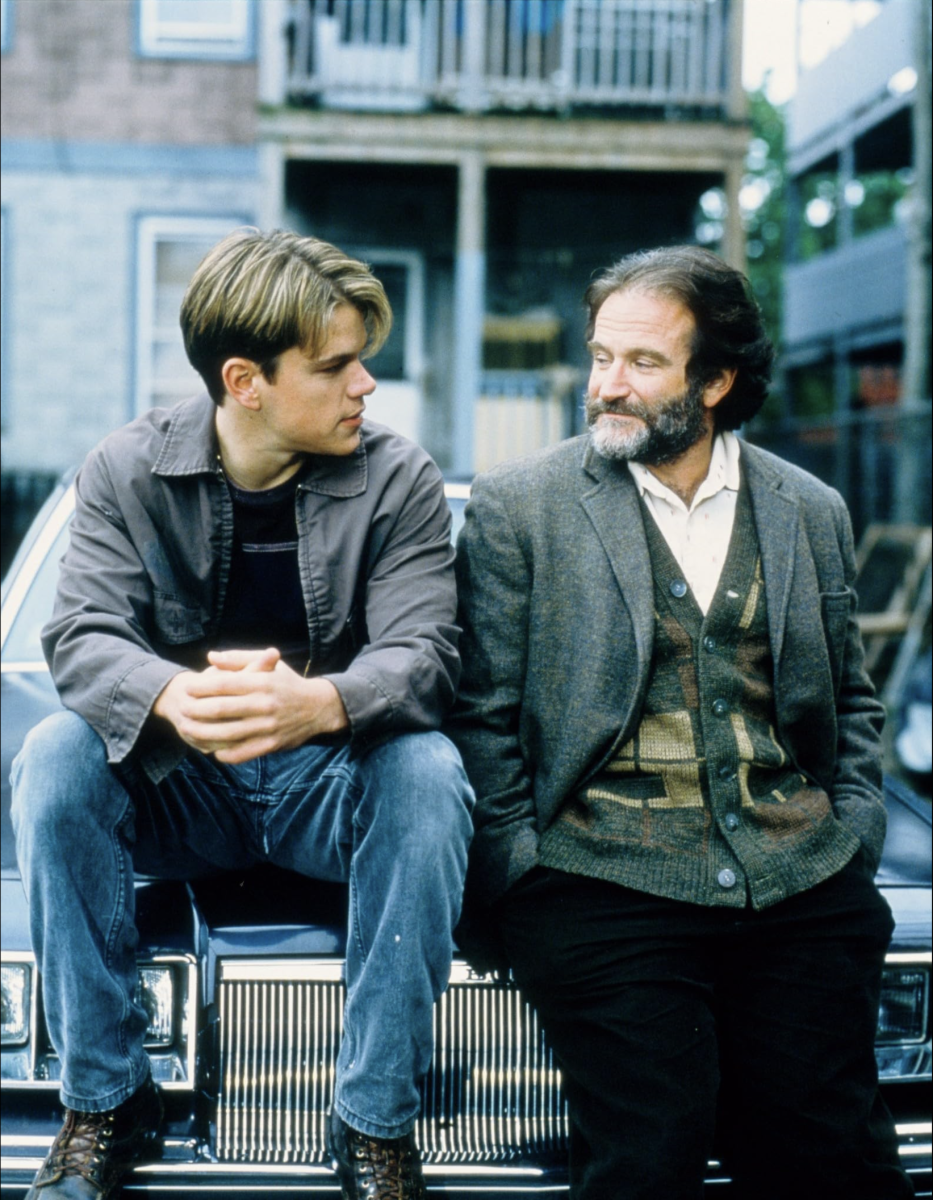
1. ‘Good Will Hunting’: But of course, the film that undoubtedly holds the title as best male weepie has to be Gus Van Sant’s “Good Will Hunting.” Hidden behind a rugged exterior of swearing, drinking and Boston accents, “Good Will Hunting” is about vulnerability, fear and self-sabotage. Matt Damon’s Will may be a genius. But he’s also hindered his own feeling that he’s undeserving of love. It presents masculinity as a shield. It’s only through the guidance of Robin Williams’ Sean that Will is willing to take the path to confront himself, no matter how frightening it might be. The journey of the film is its strength, how it tears down our protagonist only to build him back up as a better version. And is sure to make any guy, from a pretentious college student to a jaded suburban dad, feel something.