


The concept of the final girl is a mainstay of the slasher genre. A final girl is defined by their ability to survive in a horror film. Whether the bad guy is Michael Myers, Freddy Krueger or even a Xenomorph, these protagonists manage to defy the odds by escaping or defeating the threat.
Decades after the inception of the final girl, it remains a popular trope in horror. Many of the horror films released this summer rely on the final girl — “In A Violent Nature,” “Alien: Romulus,” “MaXXXine,” “Long Legs” and “Cuckoo.”
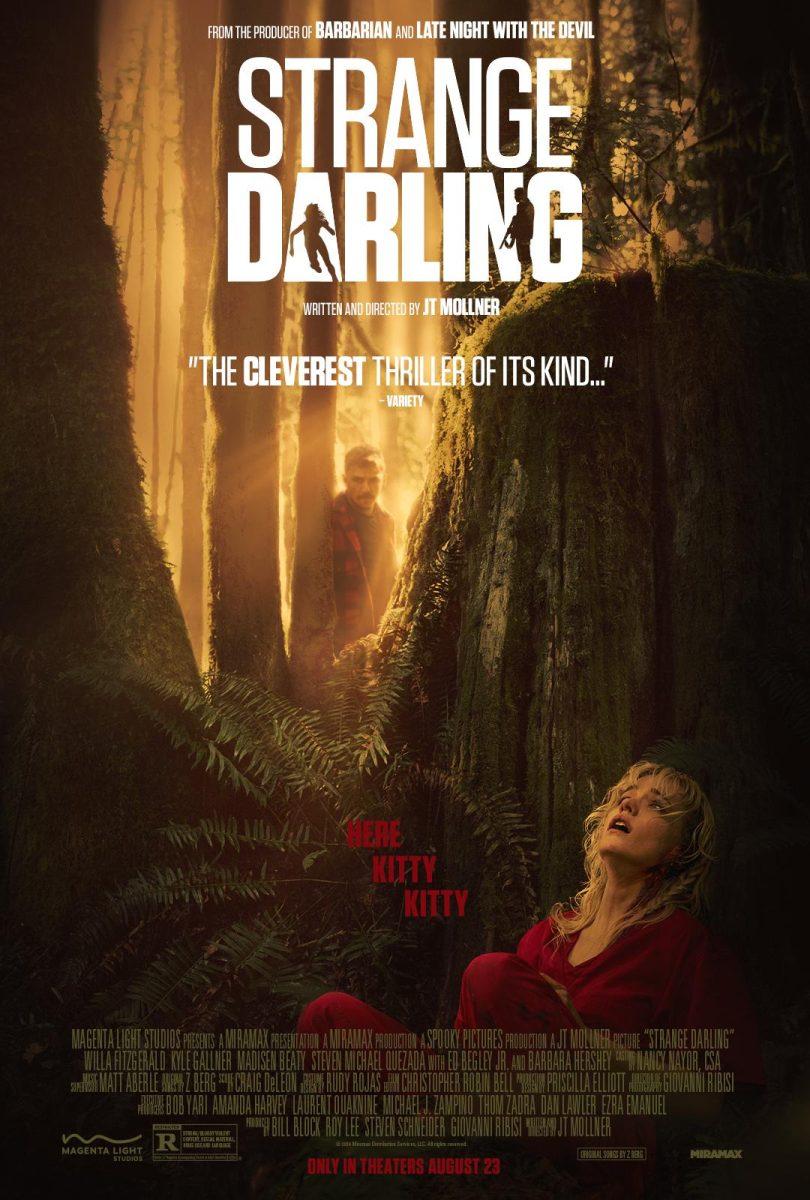
“Strange Darling,” written and directed by JT Mollner, is no exception to this trend — except that it deviates from the final girl by twisting and subverting the viewers’ expectations.
With a budget of a few million dollars, “Strange Darling” is very much an indie film. Indie films offer audiences a breath of fresh air by typically breaking away from the traditional big-budget film, giving directors more room to experiment.
The film is JT Mollner’s second feature. It’s unlikely you’ve seen his first film, “Outlaws and Angels,” but he manages to establish a strong stylistic presence with this film. A strong style is essential for a horror film to stand out.
Every review of this film will likely come to the same consensus — it’s best to go in blind.
When the film opens, the audience is introduced to its two leads with a short paragraph explaining that the film is based on a true story.
Willa Fitzgerald plays our protagonist and final girl, only known as “The Lady.” While Fitzgerald doesn’t possess the largest filmography, she did play the protagonist in the first two seasons of the “Scream” TV show.
A final girl is only as good as its actor and Fitzgerald manages to steal the show.
On the other hand, Kyle Gallner, who plays “The Demon,” is a horror movie veteran, appearing in recognizable films like “Jennifer’s Body,” “A Nightmare on Elm Street,” “Scream 5” and “Smile.”
Funnily enough, the most famous person on set may be the film’s cinematographer, Giovanni Ribisi. This film marks his debut as a cinematographer.
The cinematography is one of the film’s highlights.
Mollner opted to shoot entirely on 35mm film, allowing audiences to feel immersed in its’ intentional recreation of what feels like a true crime documentary you’d see from the 1990s. This observation isn’t wholly based on just the cinematography, but many of the elements that run deeply through the film to craft the film’s iconic sense of immersion.
Without going into spoilers, the film starts with a cold open that harkens back to a Quentin Tarantino film like “Pulp Fiction” or “Kill Bill.” This is only exemplified by the film’s non-linear story structure and sporadic score.
“Strange Darling” starts off on a high note, leaving the audience dazed.
From there, it continues to ramp up in intensity. Right when the movie starts to slow down, something happens that will leave the audience speechless.
The film’s key moments are extremely visceral, leaving a lasting impression on the audience as they attempt to connect the dots to figure out what’s happening. While that can be a bit jarring, it does pay off.
Overall, the film is an enjoyable experience that manages to surprise in the best way.