



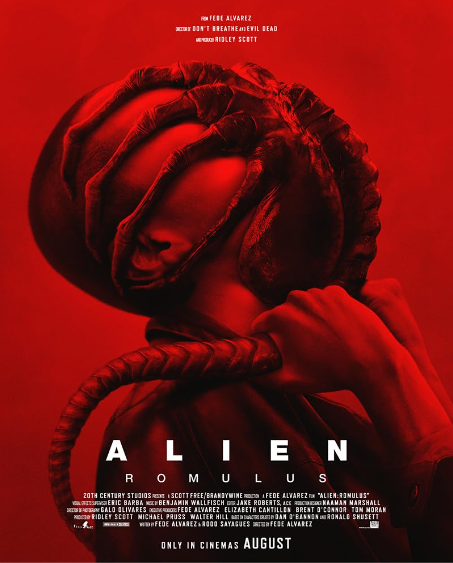
After two installments of philosophical pondering and mythology mapping, “Alien: Romulus” brings the sci-fi horror franchise back to its source: the terrifying isolation of space.
Directed by horror veteran Fede Álvarez, the newest “Alien” installment follows Rain Carradine (Cailee Spaeny), an orphaned 25-year-old living on the mining colony Jackson’s Star with her android-surrogate brother Andy (David Jonsson).
As the duo and their friends struggle to survive on a colony built to constrain them, they decide to escape the planet using spare cryopods left on an abandoned space station above the planet.
Unbeknownst to them, the cryopods weren’t the only thing left remaining on the station.
Crafted in the same vain as other horror reboots such as 2018’s “Halloween” and 2009’s “Friday the 13th,” “Alien: Romulus” serves as a retread of classic scenarios and memorable themes while still introducing enough new concepts to leave long-time fans happy.
Although some have grown tired of this iteration of horror flicks, Fede Álvarez knows the right cards to play, having already established himself in the horror scene with his 2013 remake of “The Evil Dead.”
“Alien” and “The Evil Dead” may be very different types of horror films, but both rely on one key factor: Atmosphere.
Although the films are over ten years apart, it’s impressive to see Álvarez manage to recreate the grimy yet humorous tones of “The Evil Dead,” only to then revitalize the claustrophobic, anxiety-inducing notes of Ridley Scott’s “Alien.”
Tonally, the film feels like it could have been released only a few years after the original.
Returning the beloved series to its horror roots does have limitless potential, but it also comes with a new set of caveats that “Alien: Romulus” doesn’t always avoid.
Similar to his “The Evil Dead” remake, the new “Alien” film can be described as a “greatest hits” movie; a type of film that brings back iconic moments. While this can certainly work – it does in “Evil Dead” — there’s a fine line between what is and isn’t going overboard. Sadly, “Alien: Romulus” isn’t always able to keep up this balancing act.
The film’s use of practical effects blended with modern CGI, stunning production design ripped straight from the original film and narrative connections with new and past films make this a worthy addition to the “Alien” mythos, yet its overreliance on reusing dialogue such as “get away from her, you bitch” and even the return of a beloved character using dodgy visual effects — the actor has been dead for four years — is eye-roll inducing. The few moments sprinkled throughout where the film attempts to do something brand new are exciting and innovative, yet these nuggets of nostalgic gold keep it restrained from attempting too much.
On the bright side, one of the newest additions that does work through and through is the cast.
The entire crew of the film being young adults is a simple inclusion, yet it feels like a fresh spin on the franchise formula, even if several of them are purely there to be Xenomorph prey.
The two main leads, Cailee Spaeny and David Jonsson, with the addition of supporting actor Isabela Merced, are crucial parts of what makes this film the best in the series since the original.
Sigourney Weaver’s Ellen Ripley will always be considered one of cinema’s defining sci-fi heroes, but it’s safe to say that Spaeny’s Rain Carradine is the best lead heroine since.
With such high praise you would assume that Spaeny would undisputedly be the best actor in “Alien: Romulus,” yet that honor goes to Jonsson.
We’ve had a variety of memorable androids in the “Alien” universe, including Ash, David and Bishop, but Jonsson’s Andy is the finest android yet.
Android characters have become synonymous with being villainous, that one being as sympathetic and passionate as Andy is a major turning point for the series. Jonsson’s wide variety of characteristics is impressive to watch as the film weaves through each of its plot twists. It’s because of Jonsson’s outstanding performance that the film themes – delving into what constitutes true family – shine as bright as they do.
Fede Álvarez’s love letter to “Alien” may often be a remodel of the 1979 film, but when it leans into its original ideas, it’s a massive step forward and return to form for this revered franchise.
“Alien: Romulus” is in theaters.