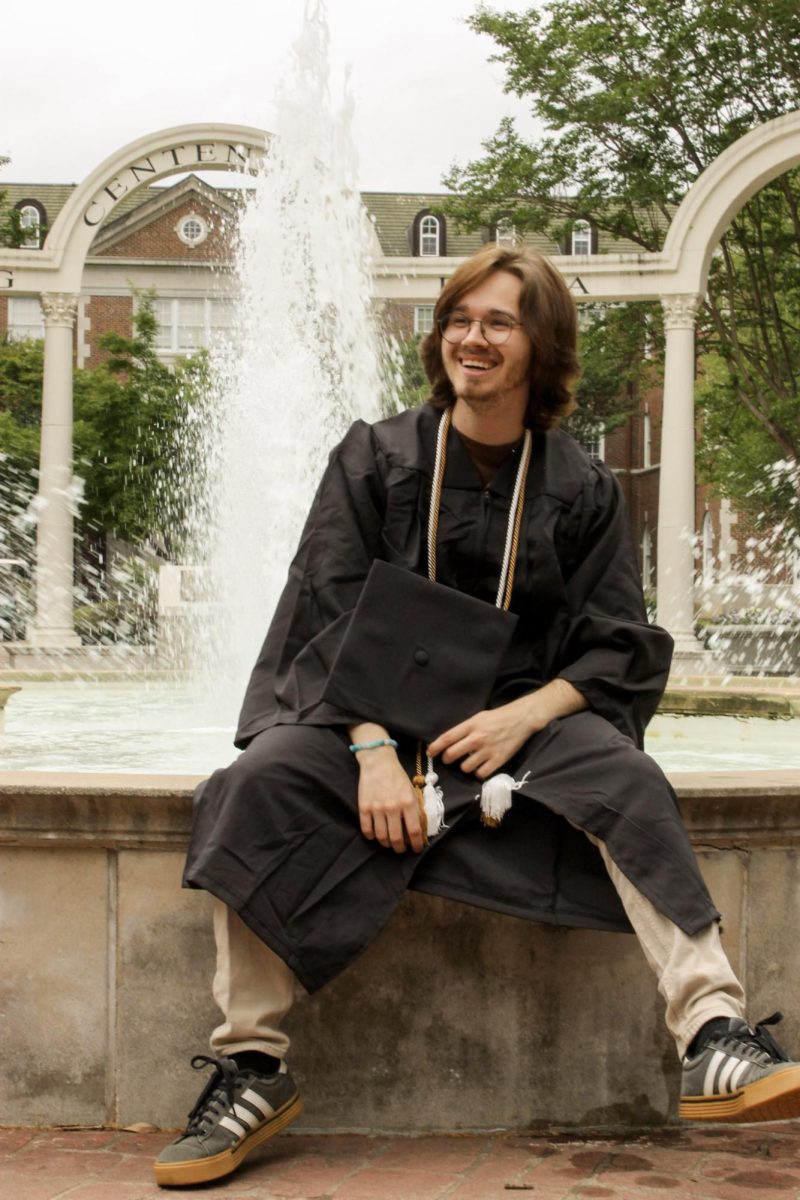



Carter, an alumnus and UCA’s associate vice president of facilities, said he gets “probably 150 emails a day,” and averages “20 meetings a week.”
“When I was a student at UCA, I knew about the physical plant but didn’t really know what all it did,” he said.
Carter went to UCA for business management and later earned an online post-baccalaureate certificate in construction management from Louisiana State University while working at UCA.
Graduating at the tail-end of the recession, Carter said he didn’t have many job options.
“The job market wasn’t great at the time and I’d had a lawn care business all through high school and college, so the position for grounds supervisor opened,” he said.
Carter planned to continue working in the position until another opportunity arose.
“But, I just loved working here,” he said. Carter has enjoyed his 13 years at the physical plant and his many job titles are evidence he climbed the ranks.
“I started as the grounds supervisor, and then I was the housekeeping manager, and then construction manager and associate director, and now I’m the associate vice president,” Carter said.
“I think there’s a lot more that goes on in the physical plant than people realize,” he said. Carter estimated 175 people work for the plant, including about 90 custodians who clean campus buildings.
Carter said he likes to hunt and fish and that he’s “a big tree guy.”
His favorite thing about UCA’s campus is “the beautiful trees we have,” but he said keeping track of the university’s oldest trees is yet another way the physical plant keeps students and workers safe.
Pointing to oak trees he said were 60–80 years old, he said, “You can see spots where they have limbs that have fallen off, so that makes me a little nervous.”
“In 1987, there was a student that got killed by a limb in the front lawn of Irby. It was a bluebird day, no storms or anything,” he said. “So, that’s something we watch very, very closely.”
The physical plant seems like an unremarkable building to most, but it holds the heart of many operations that keep the campus functional, from indoor temperatures to fueling up campus vehicles.
“We have electrical, plumbing, painting, carpentry, motor pool, transportation, warehouse services. So, a lot of different things happening,” Carter said.
In the physical plant building, a “really small room with lots of computers in it” holds all the HVAC controls.
“We can monitor all the building systems and see the temperature of spaces and we can adjust them from here, too,” Carter said.
One of the plant’s current multiyear projects is to make this system web-based.
“Christmas break, when we had the big freeze and all the pipes were freezing and busting, someone had to be in our control shop in order to monitor that,” he said. “Moving to a web-based system, you can pull it up on your laptop at home and open and close valves.
“One thing that’s kind of unique for UCA is, we have what’s called a district cooling loop,” Carter said. “It sends chilled water all around the campus, and it goes in and out of buildings, and we have different stations around campus where there are chillers that contribute chilled water.”
He said that is how AC works in the buildings.
“It cools the water down, goes into the buildings, runs through the coils, which — air blows across those coils to create the cold air — but it’s done through a closed loop system on our campus.”
He said damage during a summer construction project a few years ago broke one of those deep, fiberglass pipes, and that “it knocked out the air conditioning to about 90% of the campus,” he said.
He described specific challenges that require the physical plant to be versatile.
“We’ve got buildings that are brand new, and we’ve got buildings over 100 years old,” he said.
An example of this is Harrin Hall, where he said, “We have one building, but two completely different eras when they were built, so it can be a challenge sometimes troubleshooting issues we have over here.”
At the plant’s parking lot, it’s hard not to notice the sound of vehicles leaving and going.
“We have three mechanics that manage all the golf carts, trucks, vehicles, cars, equipment and everything,” Carter said. “We have gas pumps that we fuel all our own vehicles here, except for if they go over the road, like the big buses to take the sports team places.”
Carter said an “interesting fact” was that the diesel used for on-campus zones isn’t taxed, which is why other vehicles have to fill up off-campus.