




This year’s rise in gas prices hasn’t just taken a toll on everyday drivers, but emergency services too.
In September, both the Conway police and fire departments requested extensions to their annual fuel budgets as a direct result of record-high fuel prices.
The city council passed ordinance O-22-106 on Sept. 13, 2022, to appropriate $100,000 toward the Conway Police Department for fuel for the remainder of the year. Two weeks later on Sept. 27, the council passed ordinance O-22-112 to appropriate $40,000 to the Conway Fire Department for fuel for the remainder of the year.
The fuel budget for the police department this year was $270,000 before the department was granted the $100,000 extension. This year’s budget was $70,000 more than the budget for 2021. Even with the increase in the 2022 budget, the amount wasn’t able to suffice in the current economic state, where high gas price records were broken across the state and country.
Lacey Kanipe, public information officer for the Conway Police Department, said the department budgets for fuel each year are based on current prices, which usually works well for the department.
“We budget for a certain amount each year and that typically suffices. This amount can fluctuate based on the price of fuel,” Kanipe said.
The fire department’s fuel budget was the same for both 2021 and 2022, sitting at $94,000 before the budget extension.
Both the police and fire departments agreed that there is no other explanation for their fuel budgets not sufficing other than the rising cost of fuel this year.
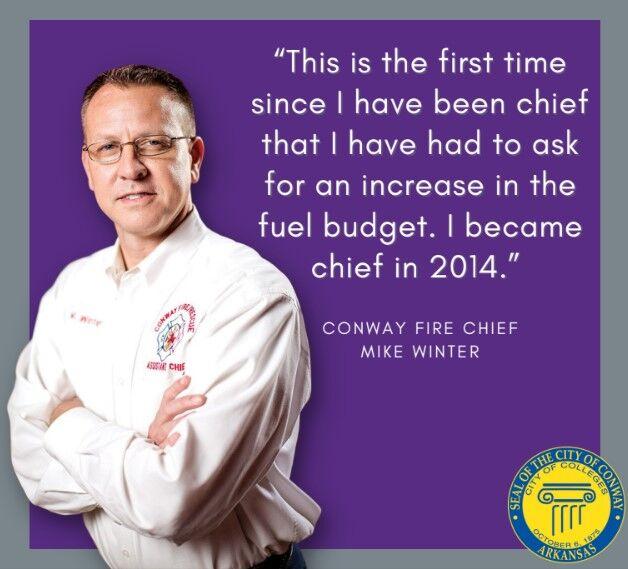
Fire Chief Mike Winter said, “This is the first time since I have been chief that I have had to ask for an increase in the fuel budget. I became chief in 2014.”
Aside from the ordinances granting more money to both departments for fuel, they have also each taken measures to adjust for the high cost of fuel in order to still operate properly and keep the community safe.
Kanipe said, “We have made some internal changes to try and adjust for the cost of fuel, but the safety of the public is our primary mission and any changes made did not affect that goal. Supervisors also send out an email each day listing locations with the lowest fuel prices and each employee is encouraged to visit those locations when in need of fuel.”
Likewise, Winter said the fire department began to make adjustments in April when they noticed gas prices rising and their fuel budget taking a hit.
“We had estimated that we would be able to make it through July or August at the current rate of fuel prices in April. The adjustments in activity were made and we were able to make it through September before exhausting our budget,” Winter said.
Some of the adjustments made within the fire department included reduced training, pre-fire planning, hydrant maintenance and not allowing department personnel the freedom to grocery shop or go out to eat as they had been before, but instead confining them to the station to save money.
Due to recent hot, dry conditions, the fire department has also experienced an increase in calls over the last month.
“We have had numerous responses to grass fires throughout the city during this most recent drought. We had one of our engines get hit on the interstate while battling a grass fire earlier this month. Fortunately, no one was injured,” Winter said.
While the city’s first responders have faced adversity presented by the rising cost of fuel, the University of Central Arkansas’ police department has been lucky enough to dodge these fuel-related problems.
At UCA, fuel for campus police patrol vehicles is funded by the university’s access and security fee. This fee is $27 for the 2022-23 academic year and $15 during the summer and is charged to all UCA students.
UCAPD’s public information officer Michael Hopper said the department doesn’t solely rely on vehicles as their main form of patrol.
“Our department has always utilized alternative patrol methods, foot patrol, bike patrol, etc. to complement our vehicle patrol. This helps us reduce our fuel costs, but also allows for community policing opportunities and better community relations,” Hopper said.
He said that due to the multiple methods of patrol, he cannot see any necessary reason why UCAPD would need to allocate additional money for fuel.