


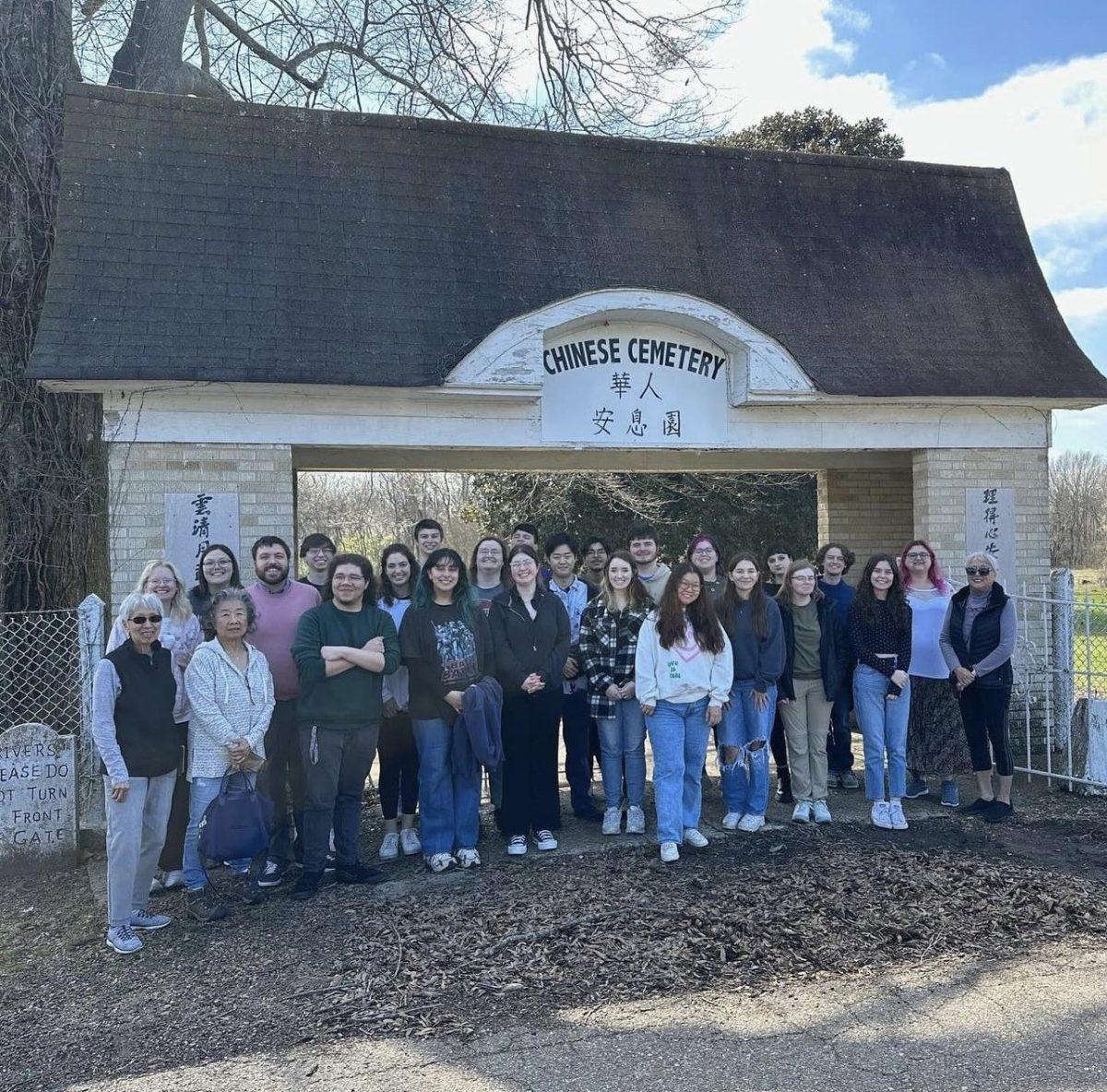
The UCA History department has continued to provide enriching and meaningful courses for their students, one being Asian American History in the South, taught by Professor Zachary Smith.
Smith said he “felt like UCA is this fantastic mix of a public institution, that is serving diverse students, but that also allows us to teach in a way that really values community and conversation.”
His attitude reflects the structured, community-based learning environment facilitated during his course.
Smith officially serves as an associate professor of history, director of the interdisciplinary Asian Studies minor program, board member of the UCA Center for Chinese Language and Culture as well as the Arkansas State director for the National Consortium for Teaching about Asia.
In Smith’s course, students create a formal archive for the future benefit of historical researchers.
“We are taking this archive that we’ve created and actually using it to tell important unheard-of stories about Chinese communities in the South,” Smith said.
Kirsten Harper, a junior history education major said Professor Smith was ”a little strange, but in a good way. Loves cats — if you don’t, don’t even bother taking his class.”
This semester, the cat-loving class traveled and collaborated with their professor and the Arkansas Chinese Heritage Project to make the course more engaging and immersive.
“The most interesting theme we have discussed is how the United States has treated different groups of Asian Americans throughout history. I had always assumed the Chinese and Japanese immigrant experiences were very similar, but they are actually vastly different,” Harper said.
The course strives to surprise and enlighten students on Asian topics that Arkansas public education mostly overlooks.
The class’s engagement with the Arkansas Chinese Heritage Project is a key feature of the course; students work with transcriptions of oral interviews, and then preserve and present the historical themes found within those communities.
Kirsten Harper said, “The most challenging aspect of the course is figuring out how to format the metadata. I have done extensive archival research online and at an archive, but creating a resource is a whole different beast.”
What makes this collaboration especially constructive is its ability to apply historical skill sets to create new, necessary resources.
Smith said, “At this point, there hasn’t been a ton of formal scholarly work, there’s not a textbook on Asian American history and Arkansas. I wanted to involve students in the process of creating that history, and to make it more available for other folks.”
Though field trips in college are uncommon, students in Smith’s class have traveled to the WWII Japanese American Internment Museum in McGehee, Arkansas; the Mississippi Delta Chinese Heritage Museum in Cleveland, Mississippi; and a Chinese cemetery in Greenville, Mississippi. This trip gave students a chance to interact and learn from leaders in our community such as Jeff Owyoung, Mayor of McGehee, Arkansas.
Smith said, “I just wanted to give students the chance to think and experience the places where many Chinese communities in Arkansas first established themselves.”