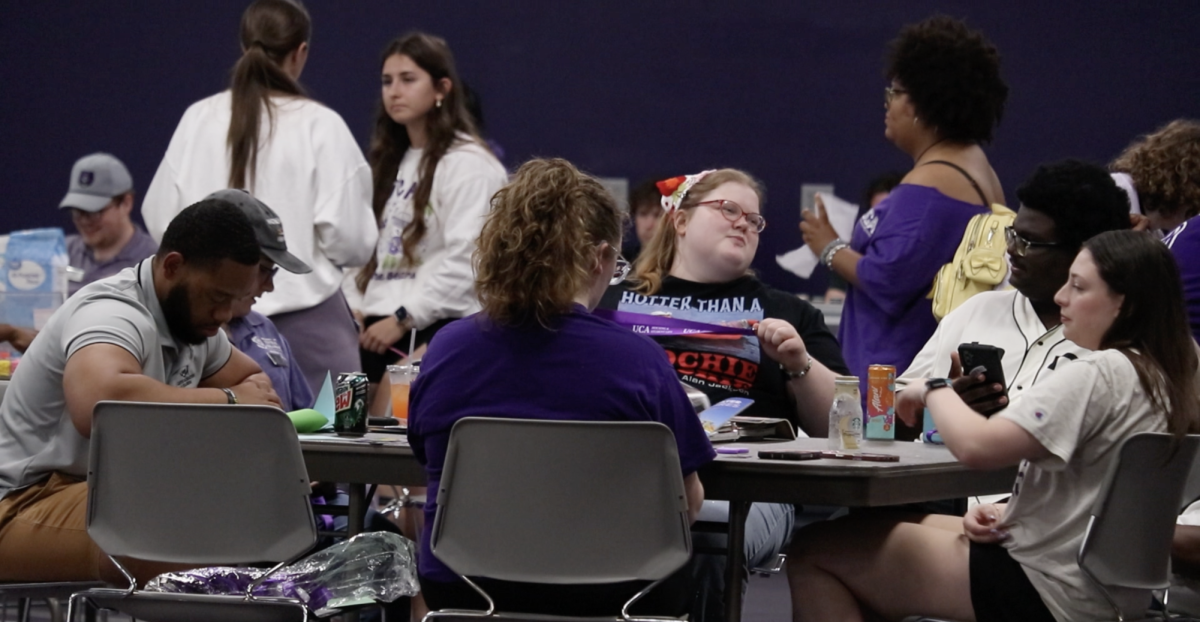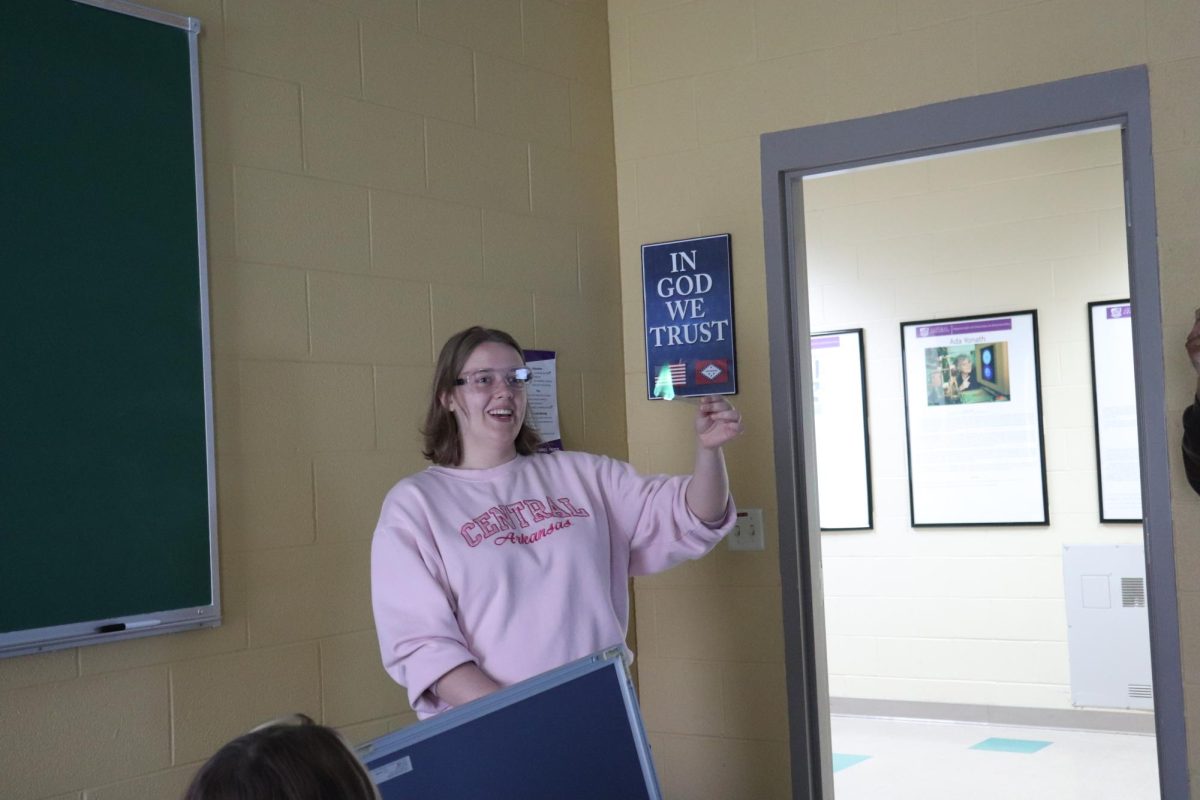




The Bear Advocacy Group hosted an election teach-in Feb. 1 to discuss the upcoming primary elections and the importance of young voters making their voices heard.
“Youth voters, 18 to 29, actually have the lowest voter turnout of all demographics,” Bear Advocacy Group Committee Chair Makenna Goss said. “We are still doing better than other generations have, but youth voters generally don’t turn out. So what that means is that old people are making our decisions for us that we’re going to be living with.”
“The next couple of elections, millennials and Gen Z are going to make up the majority of voters, so hopefully you can start making changes that reflect our values,” she said.
One attendee, freshman computer science major Kade Nelson said voting can be “stressful” and “overwhelming,” but that the teach-in showed useful resources, such as a sample practice ballot.
“There’s a really high barrier to entry because people are just expected to understand how it works, and there’s not a lot of explaining on how it works,” Nelson said. “Most of the time when people are like, ‘You need to research what you’re going to vote,’ it always feels like there’s so much information. … But now I feel like I’m a bit more prepared to do that.”
Junior logistics and supply chain management major Matt Moix updated his voter registration at the event and came to “learn more about the election and what was happening at UCA. I wasn’t super informed about dates and deadlines,” he said.
“I’m updating my address, making sure I’m registered correctly. I’m putting the deadlines in my calendar to make sure I get out to vote on the correct day at the correct time,” he said. “Just making sure that I’m more prepared and ready to vote when the time comes.”
He said he wants to see young voters become more active.
“We are starting to become the majority voice in America, and we all represent that at the polls. So just taking the little effort that it takes to learn and be a little more involved than we are right now can make a huge difference,” he said.
Goss said SGA’s Bear Advocacy Group committee holds events like these to “promote civic engagement” and to “provide some ways for [students] to tear those barriers and challenges down that might keep them from engaging.”
Goss said she wanted to remind students that primary elections are “more important than they think it is.”
“The primaries really do actually have an impact, because if you aren’t having a candidate now who you are gonna like and want to vote for in November, then it kind of spoils that process,” she said.
The teach-in came just in time for the Feb. 5 deadline to register to vote for Arkansas’ March 5 primaries.
Lesley Graybeal, UCA’s director of experiential and community-engaged learning, showed the audience resources for learning about voting, like uca.edu/civicengagement.
Graybeal explained that the primary elections aren’t just for the parties to choose who will run against each other in the general election in November.
“We’ll have some school board elections on our primary ballot because in Arkansas there’s only a certain number of elections that you’re allowed to have per year,” she said.
Arkansas is a state with open primaries, meaning that even if you register as a Democrat, someone can opt to vote in the Republican primary.
“You can only pick one, but you get to say whose primary you want to vote in, and you can change your mind next time,” she said.
“Sometimes it can be hard to find election-related information because the secretary of state’s website has a lot of stuff on it, and you may not know where to look, and our county clerk website has a lot of stuff on it,” she said. “Sometimes these dates can be buried under many layers of clicking, and so we like to make it easy for you.”
Graybeal discussed how college students specifically can make their votes count.
“As a college student, you have the right in Arkansas to register either at the address you live while you’re attending school, or at another permanent address,” she said.
“I encourage folks to change their registration to here in Conway while you’re here as a college student, just because there are local elected officials who represent you here. They’re making decisions about Conway that you deserve to have a voice in, and a lot of our more contentious political issues happen at the local level,” like school board elections and mayor.
Graybeal said sometimes elections can be confusing, but she recommended printing out a sample ballot or bringing notes with you.
“The ballot initiatives that are on the ballot are sometimes really confusing, and if you haven’t researched them in advance, or at least looked them up to understand what they are, you might not be able to figure it out,” she said. “The University of Arkansas Extension Service puts out a great packet of information every election cycle about the ballot initiatives specifically.”
While photo IDs are required to vote in Arkansas, Graybeal said students’ Bear Cards will work “because it is a state-issued photo ID,” and “you’re allowed to show that on your phone because that’s the original form it’s issued in.”
Graybeal said UCA has its polling site at Donaghey Hall, where “a lot of faculty and staff here like to vote.”
“The polls are open 7:30 a.m. to 7:30 p.m. on Election Day, and we love to use that polling site, because sometimes the election commission tries to take it away if we are not getting enough use out of it, and so we really like to encourage folks to vote there,” she said.
Goss and Graybeal said the Bear Advocacy Group will host a Party at the Polls event there March 5.
“If you have to skip your lunch, we’ll have some snacks for you,” she said.