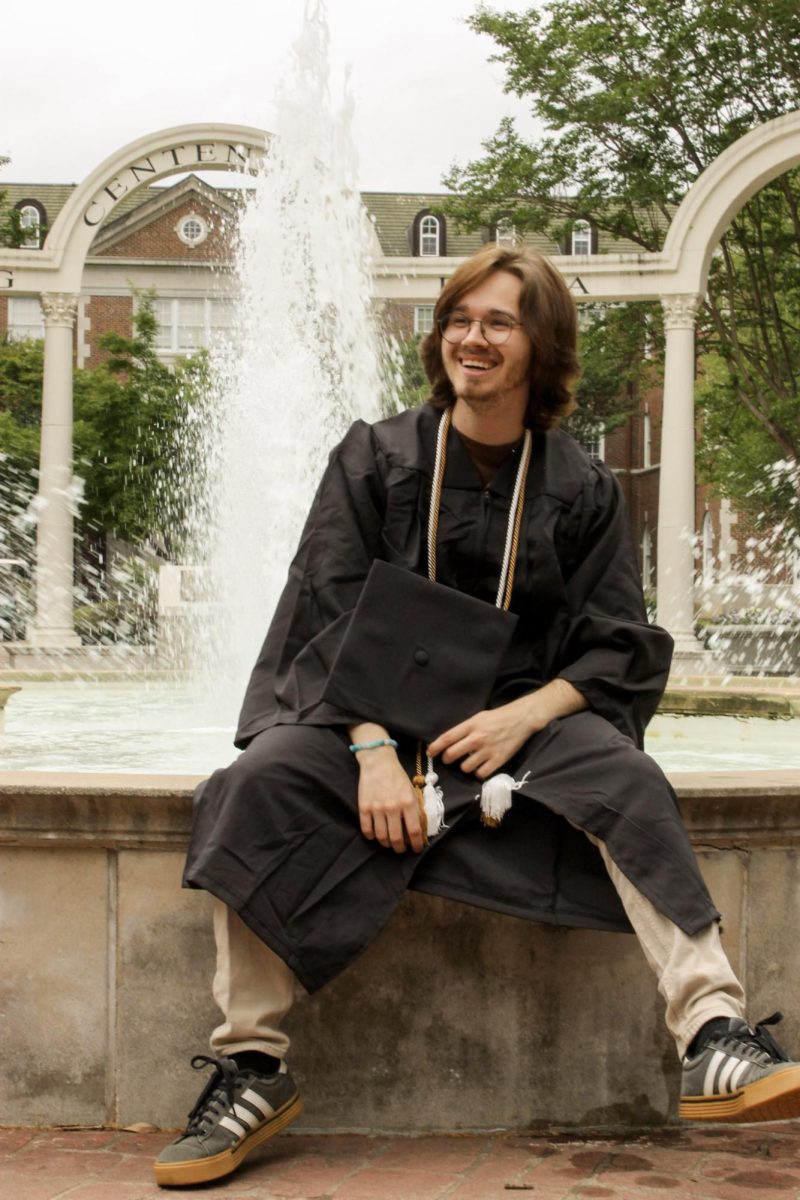


Senior history major and Asian studies minor Arima Hiroto presented completely original research to a room full of his peers, mentors and other professors after years of collecting and evaluating sources.
Presenting about Japanese refugees in the post-WWII era, his research informed his audience of unheard perspectives.
Arima said, “As a study, I only did one semester for my senior paper. As an interest, correcting sources and reading for three years. As a descendant, I started to pay attention during my time in junior high.”
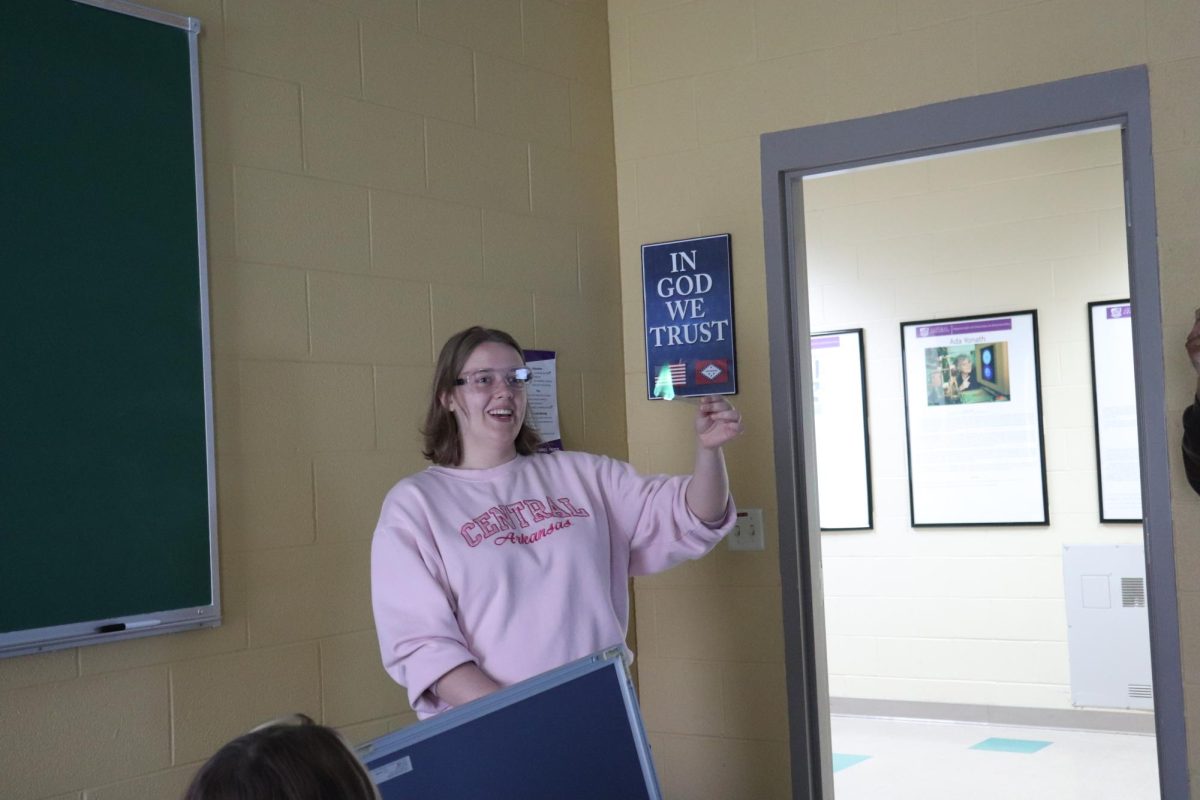
Associate Professor of History and Director of the Asian Minors Program Zachary Smith led with opening remarks and introduced Arima on Oct. 8 in Irby Hall.
Smith said, “Arima’s presentation is representative of the fantastic original research that students conduct in our interdisciplinary Asian Studies minor program and a reflection of great mentors like Dr. David Welky. Arima is drawing from historical sources in multiple languages that have never been explored before, and using them to make an original contribution to our understanding of Japan after WWII.”
Arima said, “Many people are interested in WWII, but the day of surrender does not mean the end of everything. So, these studies after WWII will help people to think about how and how long war affected both the winner and loser sides after the war. This repatriation [Japan and Germany] is a good example of how globalism worked on huge immigration, but what political issues influenced the entire movement.”
The research presentation wrapped up with a question-and-answer section, opening the audience to ask any questions they’d developed. Arima was questioned by various professors and promptly answered with insight into his topic.
As an international student from Japan, Arima was also able to share more differentiated research by translating Japanese sources into English.
Arima said, “The language barrier made it difficult to find other research and sources. Some research that used Japanese sources, but never used the Japanese language or names in the paper were difficult to find. Also, titles might be different translations, so I must consider what this means in Japanese. Also, most Japanese primary sources I used have not yet been translated for many reasons, such as private and old ones. As a result, I needed to translate [sources] to use in my paper. On the other hand, this made me want to spread and study more about this topic worldwide. If that were achieved, other/later scholars would not need to be confused like me.”
Arima, graduating in the spring 2025, provided an option for people in the audience to read his research paper if they were interested in reading in more detail.
Smith said, “Students from the Asian Studies program have previously presented at regional and national conferences, and I’m glad that more faculty and students on campus get to learn about the fantastic work our students are doing.”