



Students for the Arts hosted an informative zine-making event focused on spreading awareness about the Arkansas art economy while also introducing those in participation to a zany medium.
Students showed their dedication to the arts with a foldable activity during the group’s Feb. 16 event.
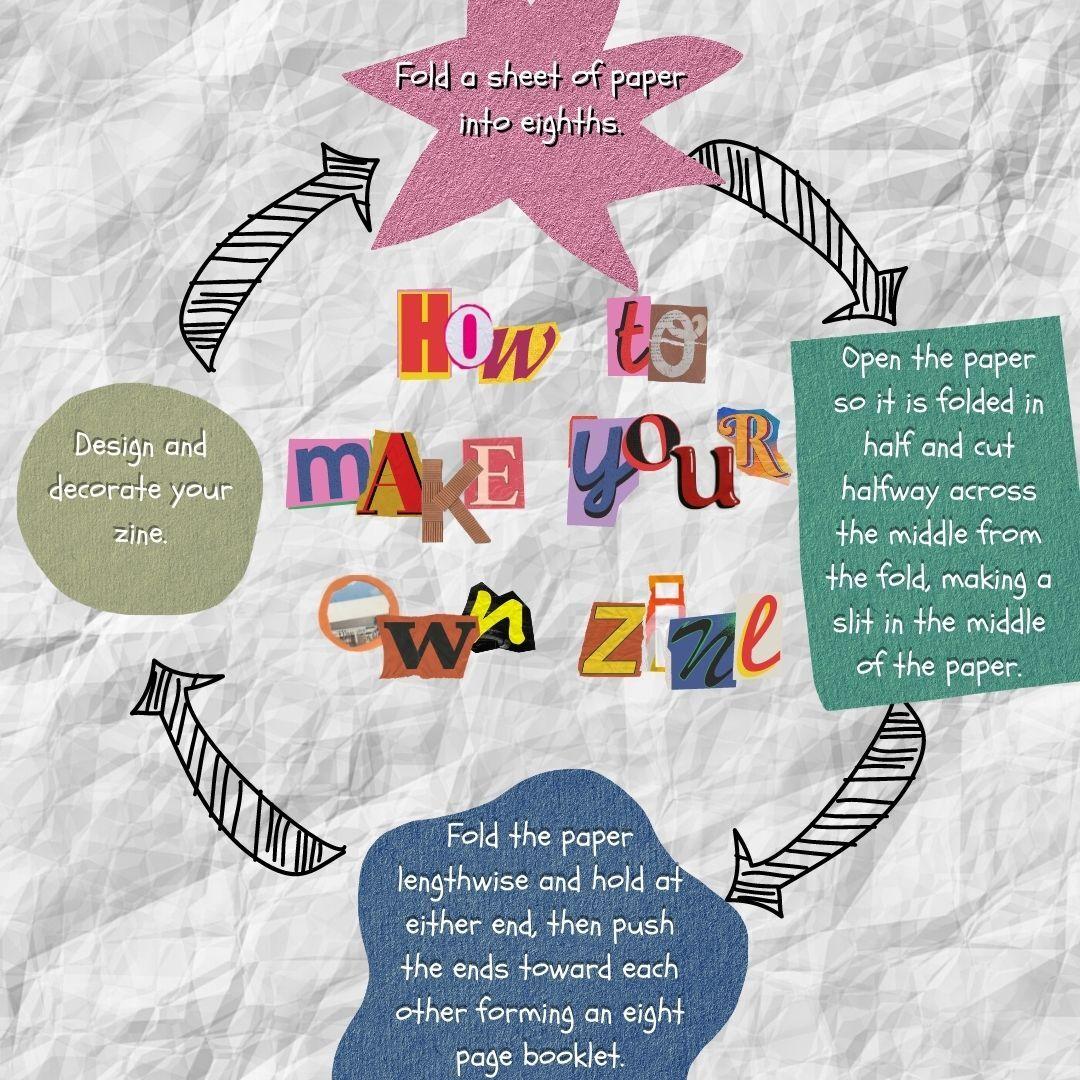
Zines are small, folded booklets that are handcrafted often with the intention of spreading awareness. Zines are especially popular in activism and counterculture movements.
Students were supplied with paper, pens and Arkansas art statistics then were invited to let their creativity roam as they explored the theme of art advocacy.
Paige Hooten, a senior art major with an emphasis in graphic design, said that while she had made similar pieces in her graphic design classes, this was her first time making an actual zine.
Hooten, who took inspiration from some photos she had saved in her phone, drew an intricate floral design branching up the front of her cover that read “Let’s talk about art.”
Hooten said she thought that zines were a useful tool for art activism because of how quick people could pick them up and read through them.
While social media platforms and online resources have since surpassed zines as a quick informational outlet, Hooten said she thought that the medium still has the power to share culture and style.
“Especially since a lot of things have moved digitally, I’ve found myself actually appreciating physical things more just because it’s hard to find nowadays,” Hooten said.
Julia Wrinkle, a sophomore pursuing a bachelor of fine arts, also said she had never made or even heard of a zine prior to the event.
Wrinkle said that her main goal when making her zine was to get the information she had learned at the meeting out into the world because she had been shocked by the statistics that were supplied to help make the zines.
The statistics, which were provided by arkansansforthearts.org, shared that 104,600 people in Arkansas are employed in the creative economy and that 8% of the total workforce in Arkansas is in the creative economy. Furthermore, the website shared that $2.9 billion of Arkansas’ GDP is generated annually by non-profit arts and culture organizations.
Wrinkle, who attended high school with an underfunded arts program, said she thought it was unfair to students to not have access to the arts because of inadequate funding.
Wrinkle shared that she thought zines were a useful tool for the art activism movement because they allowed readers to gain perspective and develop an opinion on art and art funding.
“Zines can really help people learn information and can reach younger generations than having to actively go on a website,” Wrinkle said.
President of Students for the Arts, Brynn Ward said that she plans to distribute all the zines that were made during the meeting at an event later in the year to help spread awareness for art advocacy.
The next students for the arts event will be held Mar. 2.