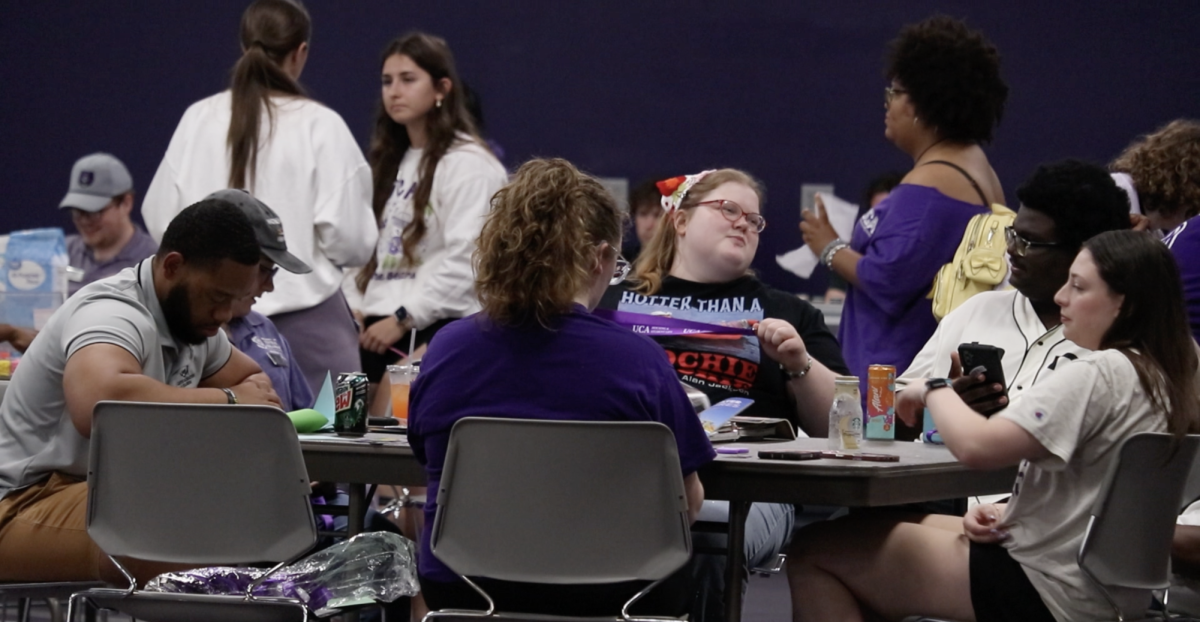

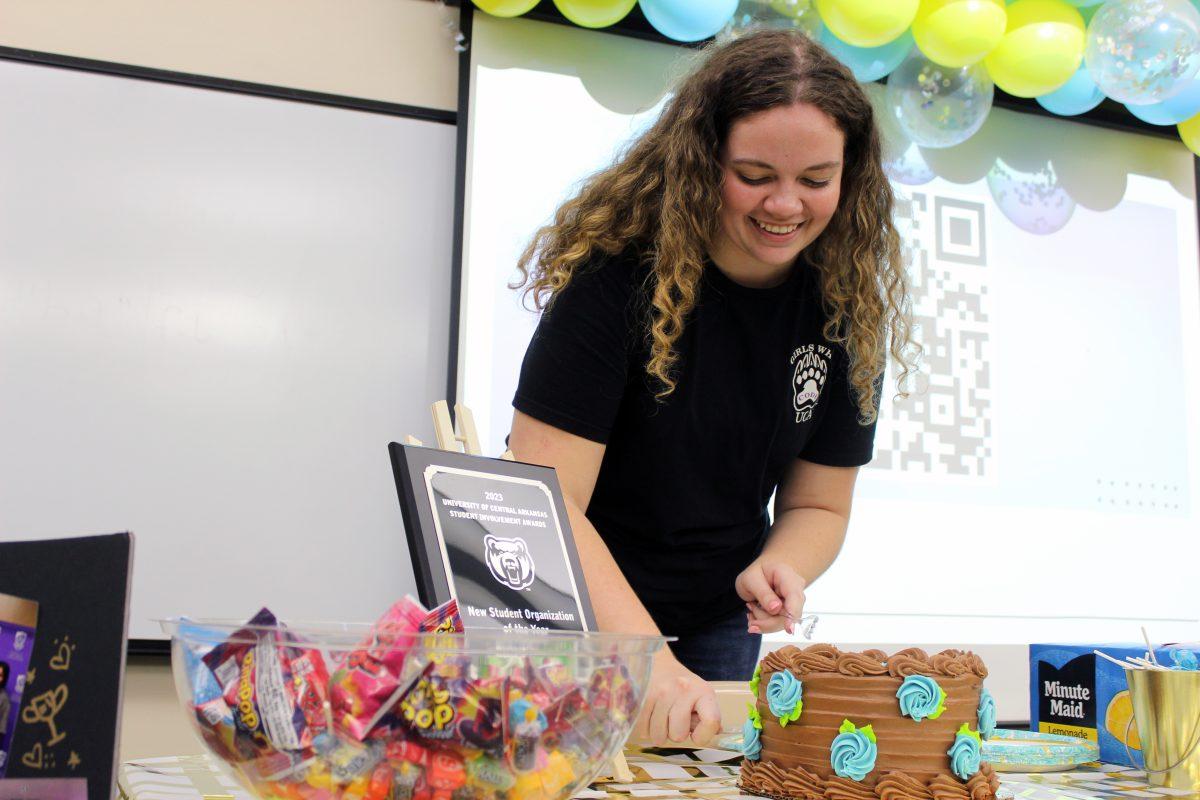
Girls Who Code celebrated its one-year anniversary with a chocolate cake, officer elections and plans to expand the RSO even further.
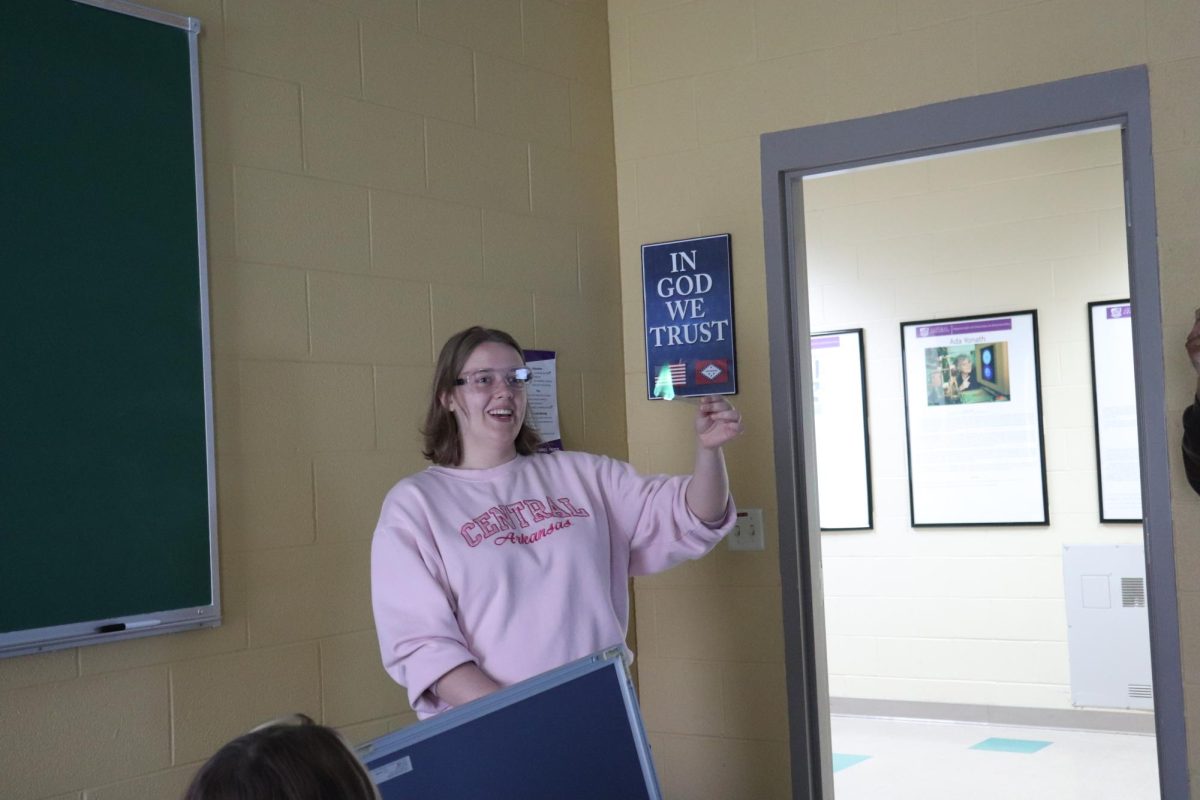
The group’s president, junior computer science major Abby Bounds welcomed its newest members with pride and was impressed by the number of attendees.
“I am so happy with this turnout,” Bounds said. “We started with eight original members. And it’s really cool to go from a message in the group chat being like, ‘Hey, guys, can you all tell your friends to sign up so that we can become an official RSO’ versus having this many people in a room. We had nine people at our first meeting, and we have a lot more than that in this room.”
The meeting was part introduction to interested members and part celebration of the up-and-coming RSO’s recent award. The Office of Student Life awarded Girls Who Code, “New Student Organization of The Year” during its annual awards ceremony in May.
The award meant a lot to Bounds, who never even saw herself taking technology college courses.
Bounds said, “I’ve always loved computers, and I’ve always loved technology, but I came from a really, really small town — like real small, y’all.
“That was never really an option for me to study tech. So I actually didn’t even start out in college as a computer science major. I started out as a poli-sci because I told myself I was gonna be a lawyer, which all respect to lawyers, I cannot go to school for that long,” she said.
The push into computer science came from her brother, who saw her burgeoning interest in tech from her high school days.
“My brother actually told me; he said, ‘Abby, you know, you’re good at this. You liked it when you took a semester of it in high school.’ He said, ‘Try it out. If you hate it, I’ll never bother you about it again. If you love it, change your major.’ And so I said OK, and he said he was right.”
The necessity of a group like Girls Who Code comes down to numbers, Bounds explained. As a self-described “statistics veteran,” she shared a graph with the room of the percentage of female computer scientists.
“In 1995, 37% of computer scientists were women. In 2017, 24%, and in 2022, we had 22%. So the numbers are dropping, and we don’t really know why. We’re on a mission to fix it,” she said.
As president, Bounds said that the group’s mission is to “close the gender gap in technology to change the image of what a programmer looks like.”
The gender disparity is clear even in the classroom setting, despite women enrolling in colleges at higher rates than their male counterparts.
Bounds said, “The reason why this is so important to me is my entire freshman year, I walked into classrooms and it would be maybe four or five women and 40 men. Some of those men are some of my best friends, but it’s just different.
“It’s hard to walk into somewhere every day and not see a lot of people that look like you and are doing the things that you’re doing. And it makes it really hard to mess up and feel like you are good at what you do.”
The power of Girls Who Code struck Bounds on her visit to the RSO.
“I didn’t realize how big of a deal it was until I walked into my first meeting here, and it was my first time seeing a classroom full of women and I was like wow, this is so different,” she said.
“But it’s kind of evolved from that a little bit. Not all of our members are computer science. We’re more of a network of women in STEM, women who have an interest in technology, women who are minorities in their field and nonbinary students, too.”
Attendees of the meeting came from multiple majors: computer science, cybersecurity, accounting and computer information systems & analytics. Members were part of the choir and even UCA’s beach volleyball team.
Bounds said that Girls Who Code at UCA is focusing less on the nitty-gritty of coding, and more on creating opportunities for women in STEM to get together.
“Our national organization does lean a lot more toward coding practice — getting together and just literally coding,” she said. “We are trying to make it just more community. A lot of the feedback that I heard last year was that it was just a really nice space to be in and a great way to get to know fellow classmates.”
Despite a more holistic approach to the group, Bounds said they have their sights on participating in the national organization’s Coding Loops Challenge.
“We’re actually going to be participating … and I believe all the winners get money,” she said.
Girls Who Code sectors on college campuses are part of College Loops, a program created by the national organization.
This year’s Girls Who Code theme is “A14FinancialGood.” Participating chapters will create projects around this theme and submit them to nationals. Winning groups will receive $500, swag for their members and a social media spotlight.
Individuals can submit projects, or they may submit them as a group. Chapters from middle school, high school and college will take part.
Bound said that the national group provides a lot of resources to women in STEM, like interviewing practice and giveaways for participating in smaller events.
The group ended its meeting with officer elections and a brainstorming session on new paths to take the RSO.
It elected Bounds president for another semester, and elected Naya Tan, a sophomore member of the beach volleyball team, as vice president.
Student Activities Board vice president and senior Samantha Lopez-Montano ran and won the secretarial position.
In her pitch to the group, Lopez-Montano said, “I’m a fourth-year here at UCA, so I know a lot about how everything works. And I’ve been at SAB as an executive member since I was a freshman. I know a lot about the kind of department clubs and event planning.” Lopez-Montano is a double major in computer science and cybersecurity.
Junior Isabelle Saettele, who was elected treasurer, said, “I’m an accounting major, so I feel I’m qualified to oversee monetary transactions since that is what I do 18 hours a week in class. I feel prepared to make a spreadsheet.”
The group also reelected senior computer science major J’Kayla Thomas to her position running social media.
The group wrapped up with a brainstorming session where Bounds announced they would move away from inviting guests to come speak at their meetings and move toward visiting companies on-site.
“I think I’m going to do away with more inviting businesses here. Computer Science Club does that, it’s a great resource, and they really have enough people to make it work for the recruiter. I can’t guarantee that we’re going to have more than, you know, five or 10 people here. So for recruiters, I don’t want to ask them to drive from Little Rock or you know, 45 minutes during rush hour,” she said.
Those interested in being a part of Girls Who Code can keep up with them on Instagram @ucagirlswhocode. The group meets every other week, with its next meeting at 5:30 p.m. Thursday, Sept. 14, in room 339 of the Math and Computer Science building.