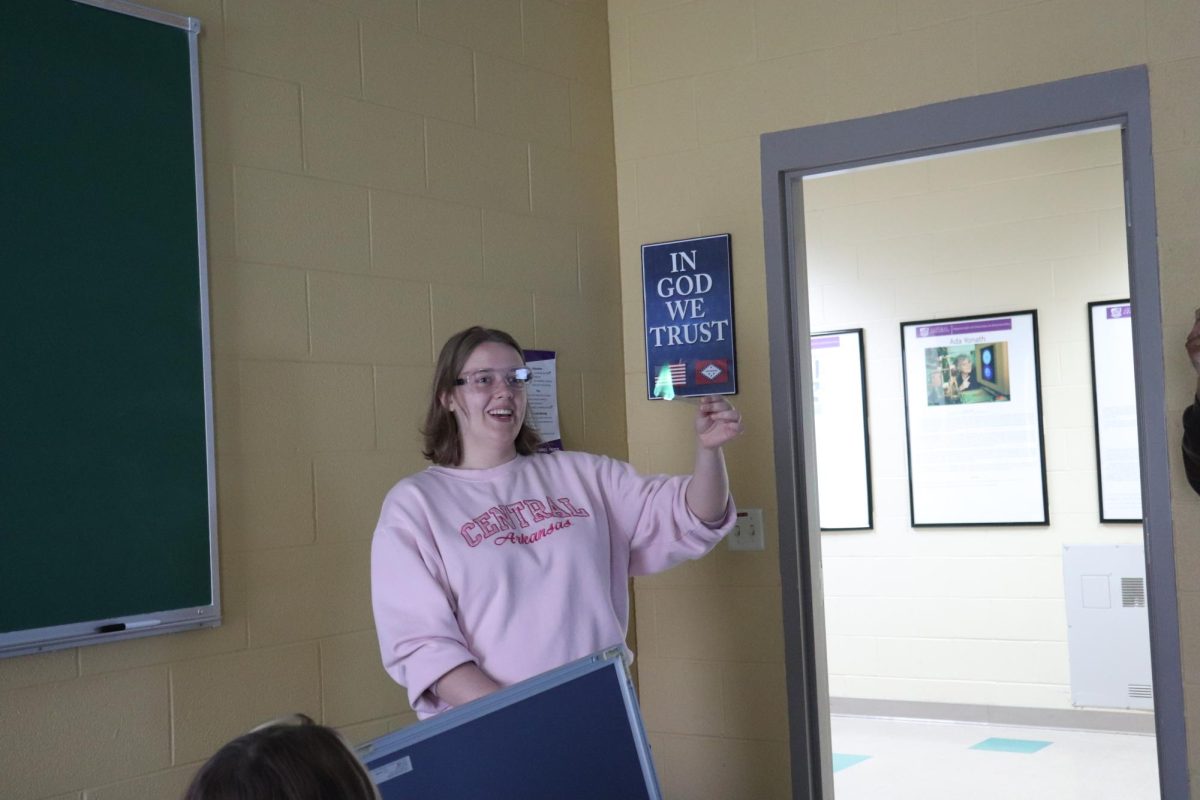




The Professional Development: Leveraging Your Honors Experience event took place in Schichtl Hall Jan. 22, aiming to acknowledge students on pitch elevator and interview skills.
The event allowed attendees to practice interview techniques and personal statements, along with post-graduate or employment applications.
The purpose of the session was to assist students in recognizing and utilizing the transferable skills they acquire in honors.
The host organizations were the Schedler Honors College, Career Services & Cooperative Education and BearX.
Sherita Kern, associate director of Career Services, spoke at the event.
“Our goal is always to educate every student with the career development, necessity they need during their college experience and even when they get a job or internship,” Kern said.
Kern said, “Students getting a degree with the hope of getting a job so we’re the middle people that can help and provide sources to assist them.”
The event also helped students work on their “elevator pitches.”
According to Kern, elevator pitch is a quick 30-45 second introduction of oneself.
This quick interaction is crucial for networking.
She emphasized the importance of career preparation and networking for students.
“Networking, regardless of what your major is, is so important,” Kern said. “I know a lot of people underestimate networking or make it become a big monster because they don’t want to be in public spaces or in groups.”
“But sometimes networking can be one-on-one meetings or a large group of people,” Kern said.
Kern said that a strong elevator pitch should go beyond basic information such as name and major.
She encouraged students to include career goals, professional interests, a memorable hook and follow-up questions for potential employers.
The presentation also introduced the STAR method, a formula used to answer behavioral interview questions.
STAR stands for Situation, Task, Action and Result, guiding interviewees in clearly explaining their experiences and outcomes.
Situation is where the interviewee should set the scene and provide context.
A task is something that needs to be done and answers the question “Why?”
Actions are encouraged to explain how interviewees handle the situation.
Result that interviewees can describe the result in terms of benefit realized.
This is the first time Denis Gonzalez-Blas, a freshman majoring in biology, went to a career-related event.
“There are a lot more to be prepared for, like the common questions and elevator pitch,” Gonzalez-Blas said.
Students were advised to prepare common interview questions in advance, such as “Tell me about yourself,” “Why are you interested in this position?” and “What are your greatest strengths and weaknesses?”
Kern also said that UCA has an online platform to practice the interview where students can go to do a mock interview.
It will record video while students answer questions of different categories based on career choices or internship.
After submitting the videos, the faculty can give students feedback in the platform via a letter format.
In-person follow-up meetings are also available for additional support.