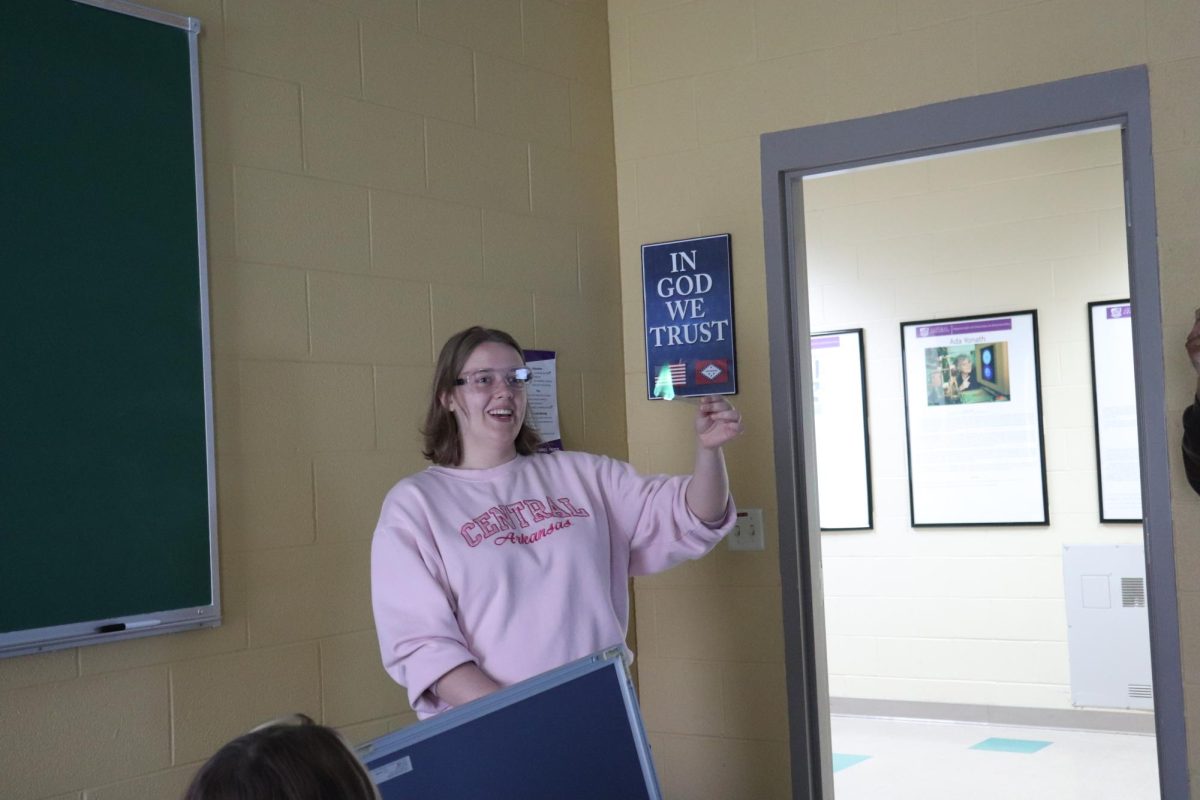




Leigh Ann DenHartog, director of academic advising, shared with students the resources and credits they need to help them reach graduation.
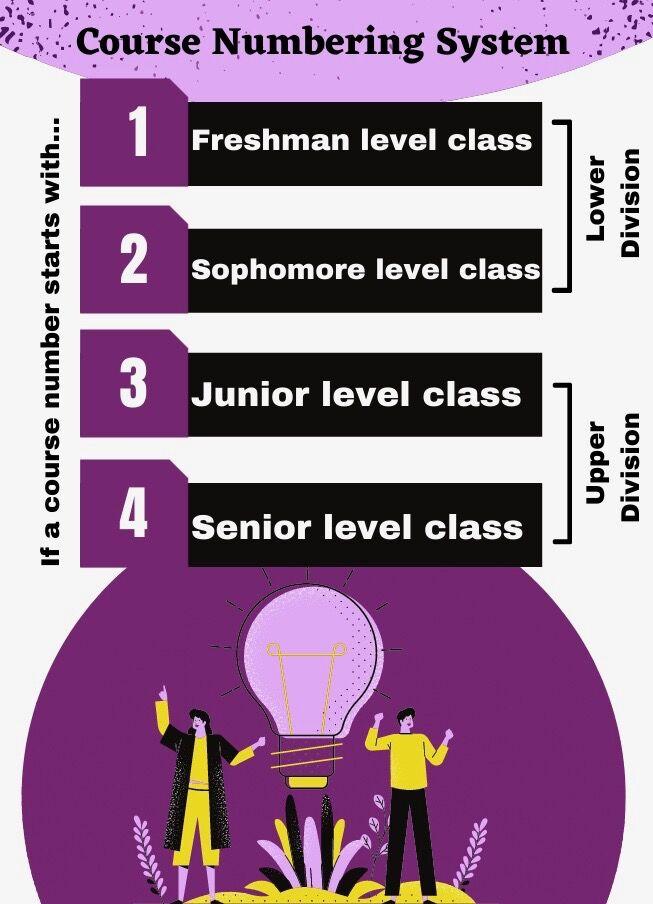
She emphasized five things students need to graduate: lower-division core classes, 40 hours of upper-division core, major or minor requirements and 120 hours in total credits.
DenHartog said, “[It’s a] little bit more than just the check sheet.”
She also showed UCA’s resources, such as accessing transcripts, accessing the academic calendar, a GPA Calculator, DegreeWorks (which shows students’ personal progress in all areas of requirements), Academic Maps (which maps out a potential degree path depending on a student’s major) and how to find an advisor. All of these resources can be found on UCA’s website.
Junior Joseph Ellis, who is majoring in marketing and minoring in graphic design, said the workshop was helpful. “[I learned] a lot of things. A lot of the resources [she showed] I didn’t know about freshman year, so I just kind of had to find my way,” Ellis said.
For lower-division core, also known as general education classes, students need at least six courses in Critical Inquiry (those of which need to fulfill a Quantitative credit, Physical Science credit, Life Science credit, American History and Government credit, Social Science credit and a Fine Arts/Humanities credit), three in Effective Communication (which need to fulfill a Writing Foundation credit, Research and Writing credit and an Oral Communication credit), two in Diversity (which need to fulfill a Diversity in Creative Works credit and a Diversity in World Cultures credit) and one in Responsible Living.
Out of these requirements, a student needs to also take into account that they need at least one class with an FA code (for Fine Arts), one with a HUM code (for Humanities) and two with SS codes (for Social Sciences) to graduate.
More information on lower-division core can be found at uca.edu/academicbulletins/ld-uca-core/.
For upper-division, a student needs to find classes in their major that will fulfill the categories of Critical Inquiry (I), Communication (C), Diversity (D), Responsible Living (R) and UCA Core Capstone (Z). Some majors do not have all the letters, so a student must meet with their advisor about where they can fill these requirements elsewhere.
Upper-division courses are listed on uca.edu/academicbulletins/ud-uca-core with classes in alphabetic order of majors and their corresponding letters.
For major and minor requirements, every student’s academic journey looks a little different. There are major and minor checklists on every UCA department website. This resource can help students plan their future courses better by knowing needed prerequisites and what courses may be offered each semester.
UCA requires students to have at least a 2.0 GPA overall, and in their major and minor classes. All classes will go to the institution GPA, but not all go toward a major or minor GPA. DenHartog said, “There is a little bit of leeway sometimes, so talk to your advisor about it.”
After all of these requirements are met, students must apply for graduation before they can graduate. This can be done through Self Service on myUCA.
For more information, visit uca.edu/advising.