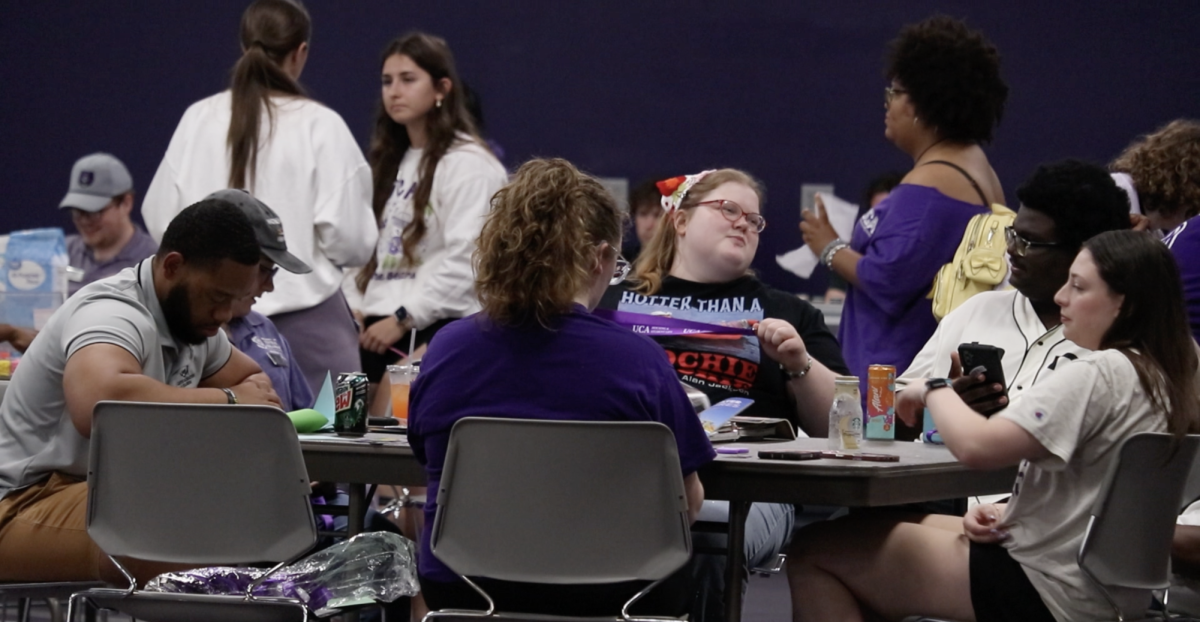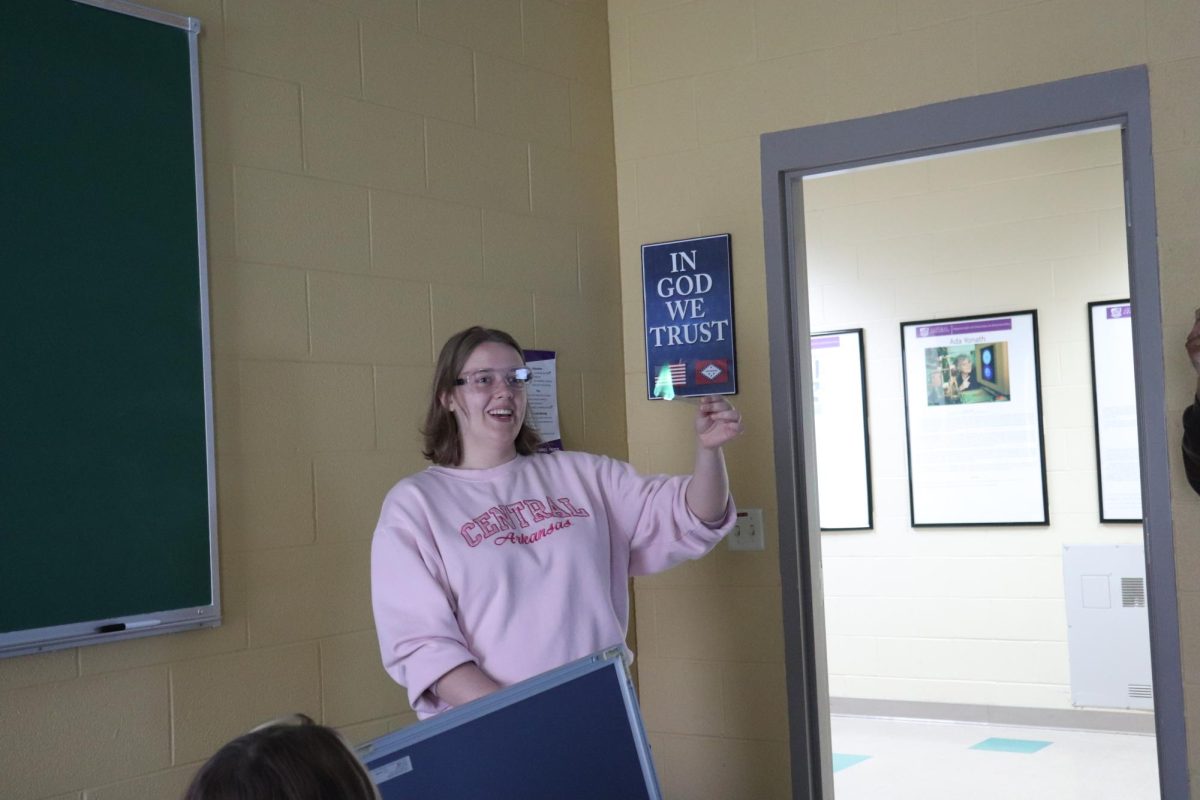


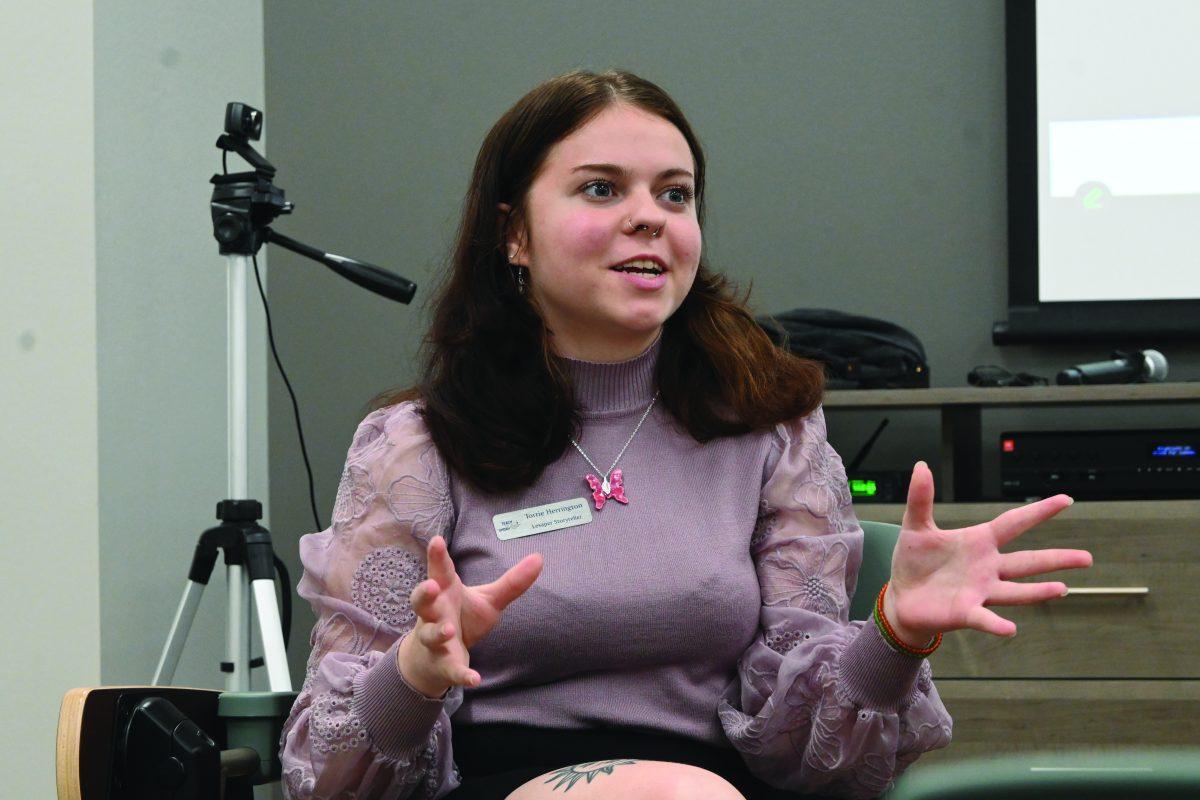
A small crowd gathered in room 115 of Schichtl Hall to hear three lesaper fellows tell the stories of Holocaust survivors March 6.
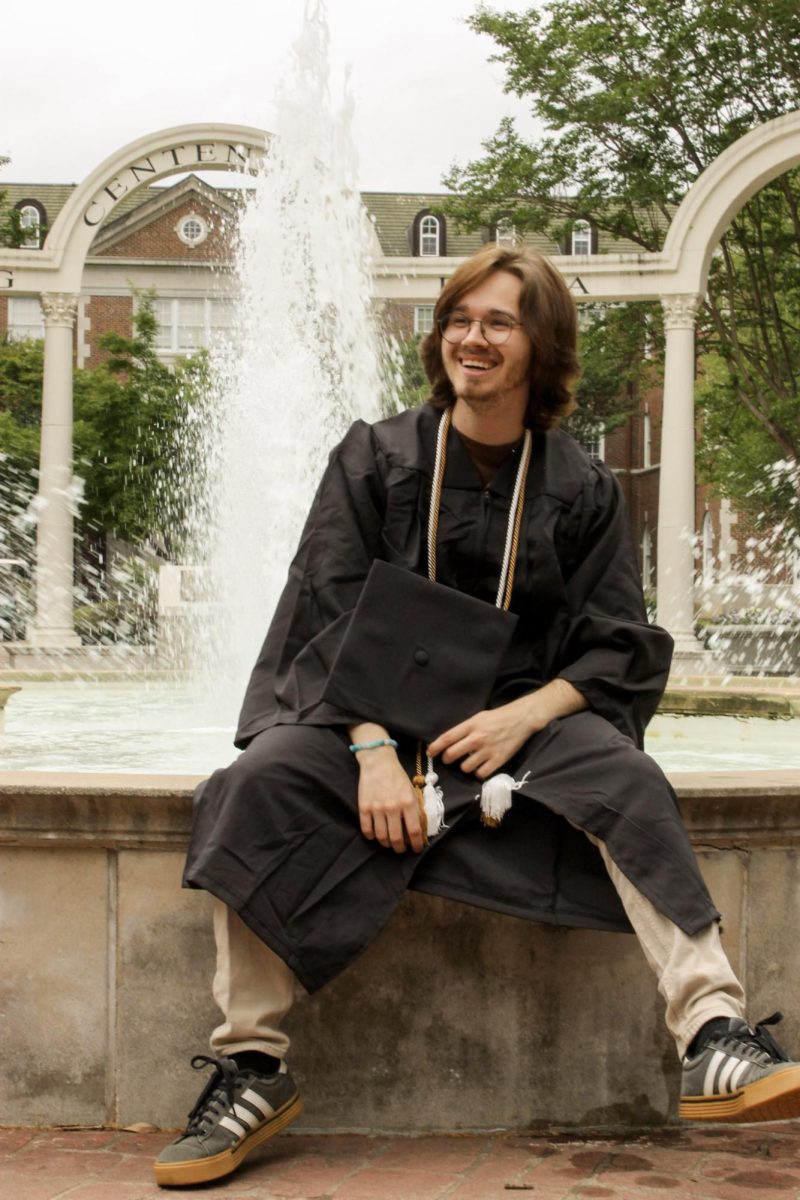
Seniors Torrie Herrington, Cooper Horton and Brenna Metts are preserving the stories of Holocaust survivors for future generations through Teach the Shoah’s lesaper project.
Advised not to speak from a script, these students developed stories based on interviews with living survivors of the Holocaust.
Herrington and Metts said that at the beginning of the storytelling process, they felt a lot of pressure with the responsibility of telling the stories of survivors.
“It’s a very daunting task,” Herrington said. “Whenever I first started getting into the storytelling process, I actually cried to the director because I was so overwhelmed by the story, just by not only how to tell it and what scenes, because we kind of separate them into scenes of their lives.”
“It’s a lot of pressure to make sure you’re doing it right,” Metts said. “You really want to be serving your survivor well.”
Herrington, Horton and Metts attended a week-long workshop in Los Angeles in December to develop and adjust their stories for presentation.
“I remember when we were trying to get our stories to a certain time length for the presentation in LA classes,” Horton said. “Mine was longer than it should have been because I just had so much content and so many things I thought were important to Eva’s story, but they really did hammer home the idea that the most important thing was not just the whole story, but the individual scenes themselves.”
“For me, a big hurdle was figuring out that I wanted to tell it in first person,” Metts said. “I felt uncomfortable with doing that until I was encouraged by Teach the Shoah and by my survivor to do that. So as I’m telling it, it really feels like not that I’ve experienced it, but it really feels like I’m watching someone’s memory, like I’m watching a movie while I’m telling it, moving from scene to scene.”
Horton said telling his survivor’s story became more natural as the workshop went on.
“I think most of us could agree it’s pretty intimidating anytime we have to come give one of those stories in front of any group of people,” Horton said. “But I think with the work that we did during the storytelling workshop in LA with the rest of our group; once you start, it’s kind of like muscle memory. It’s a lot easier than it seems.”
Horton said that the opportunity to meet with survivors was an eye-opening experience.
“I think one thing that stuck with me through the process was, like, I learned about the Holocaust in school. I think my history teachers did a pretty good job of explaining what happened, but even that didn’t really put into perspective,” Horton said. “Meeting the people and hearing the stories from the people who lived it, that really shifted things. I think it’s unfortunate that so many people probably don’t get as good of lessons as I got. But I think anybody who has the opportunity to get more information, not just on the Holocaust, but on anything like the Rwanda genocide, and anything else happening around the world, just do what they can to understand it, because nothing can really compare to people who live through it, but you can get as close as you can.”
Metts said that the preservation of these stories is important to prevent atrocities like the Holocaust from happening again.
“Being able to get the chance to learn these stories and be able to get these diverse perspectives, I think it’s just really important for being able to make educated decisions and to act responsibly,” Metts said.
Lesaper fellows commit to telling the story of their survivors at least once a year for the rest of their lives.
“I think it’s important to keep these stories alive because they’re real,” Herrington said. “There are things that happen to people, and it’s not something that we can deny. It’s not something that we should forget. It’s something that should be remembered. That’s why the practice of verbal storytelling is so important because it’s something that people have done since the beginning of time, really is telling stories to remember how things came about.”
People interested in getting involved with Teach the Shoah can visit www.teachtheshoah.org to learn more about becoming a storyteller.