



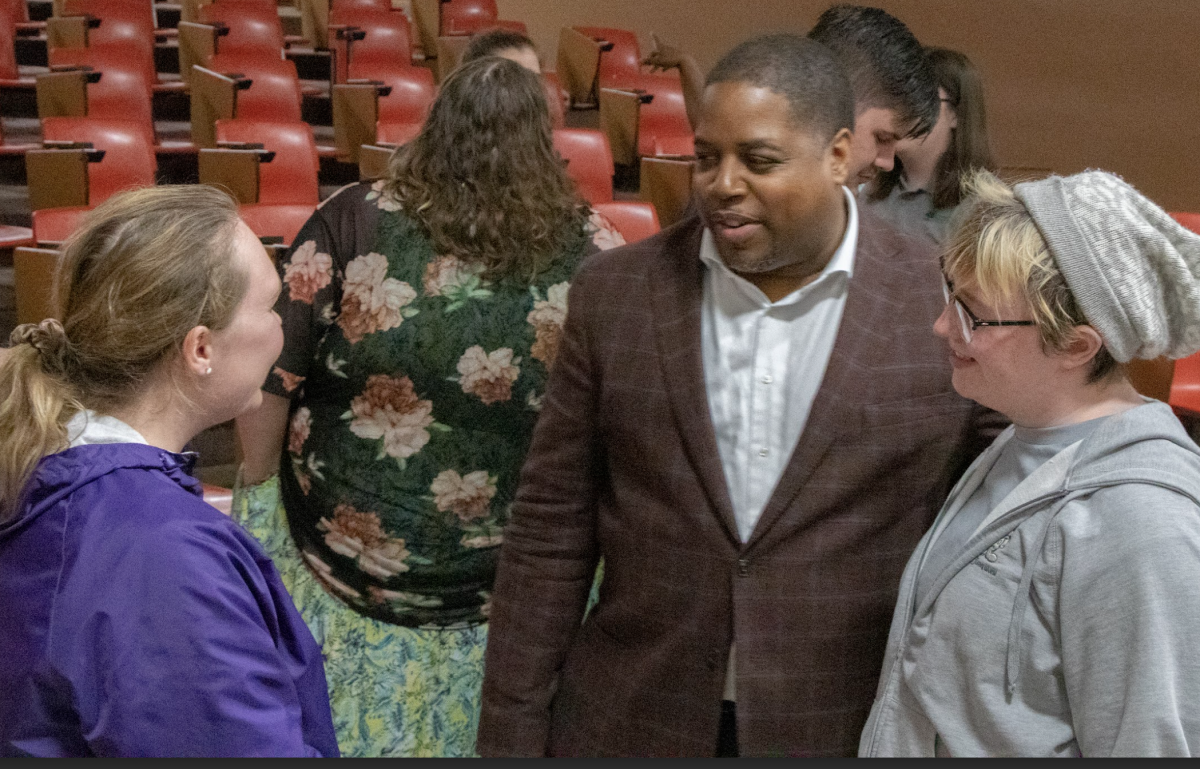
Arkansas 2022 gubernatorial candidate Chris Jones alongside attorney and former UCA board of trustees member Jerry Malone invited student perspectives during a roundtable-style discussion on civic engagement.
The event was a part of Schedler Honors Council’s “High Table” series where professionals are invited to hold conversations with students on their area of expertise.
Senior Hannah Malone, president of the Schedler Honors Council, said that Jones and Jerry Malone reached out to her with the idea.
Jerry Malone said that his intention behind reaching out was getting to hear from students about the different beliefs and values they stood for and what issues they were passionate about. “The reported issues are the issues that will make this community, this state and this nation the best they can be for all involved,” Jerry Malone said.
Malone added, “There is no disrespect for whatever views or thoughts one has. Whether you agree or disagree, we should be able to do that in a way where it’s educational, because you can learn from people you disagree with.”
Jones said that part of his motivation in attending was wanting to encourage students to be civically engaged.
Shaunell Henderson said that as a Black person, something of importance to her was finding solidarity within communities of color. Henderson kicked off the discussion by asking how she may expand her opportunities to interact with these communities in Conway and find support.
Jones used Henderson’s question as a frame to invite others to join the conversation asking, “How do you deal with your self identity and how do you build community?”
Freshman Richard Ware said, “When you have your own self identity figured out and bring it out to other groups, that will help foster that sense of community.”
Senior Hypatia Meraviglia, who uses they/them pronouns, said that they agreed with the point Ware brought up, saying that collaborating with others who are interested in the same issues as you and being able to strategize and empathize together is a tool for building community.
Ware added that he thought that collaboration between various organizations and affinity groups helps strengthen communities.
Jones said that being able to understand yourself and articulate this understanding to your community, the more the community as a whole is shaped — which in turn helps you to put yourself into context and understand yourself more.
Jones compared this process of “structuration” to the story of how to describe an elephant. In order to get a full sense of the elephant as a whole, you also need to understand the part of the elephant you are on and be able to articulate that to the rest of the group.
“I actually don’t think we ever get to 100% understanding of who we are … I think you get comfortable in who you are, but as things shift and change, you learn about yourself and you learn about your life and you learn about the world and then you shift and change as well,” Jones said.
Sophomore Emily Temple added that they thought that society’s emphasis on “hyper individualization” makes it difficult to build communities due to the expectation that a person must do everything on their own.
Jones said social contracts are the agreed on rules that dictate how society should function. “The social contract shapes the social construct that we live in … You have to ask yourself, is this the social contract I want to live in?” Jones said.
Conversation then shifted to the idea of partisanship in America and how polarity might be turned into unity.
“What’s an action you can take this year that will move us toward this mythology, this ideal about you being united?” Jones said.
Junior Makenna Goss answered saying, “I think one of the biggest things is humanizing everyone else … even if you don’t agree with someone letting them know they’re valued as a person.”
Senior McKayla Lane said, “Actively recognizing those systems that have been in place and deconstructing all of that and realizing ‘Maybe I’ve been wrong … Maybe all of this stuff whether it’s my parents, whether it’s my church, whether it’s my community or politicians I listened to, what if I’ve been wrong this whole time?’” along with “being comfortable with being uncomfortable” can be a huge step toward strengthening community.
Jones said, “If you look at anything that grows, there’s pain and discomfort in growth. That’s how you know it’s grown.”
Jerry Malone said he saw the effectiveness of discomfort in creating growth when, after the tragic death of George Floyd, he saw individuals of various backgrounds coming together to make it uncomfortable for people.
Freshman Olivia Smittle said that she thought that being able to educate yourself and being well read was also an important community skill.
The group spoke about the importance of having representation and being able to make fair negotiations.
Jones said he thinks having the ability to negotiate is necessary for the community because the solution that a community comes up with together with proper representation is able to move the community forward.
Jones also shared that he thinks the idea of coming to consensus is being threatened.
Sophomore Abby Bunch said, “There are things that we can actively do and so staying educated, staying informed but then showing up is so important because there are so many things that happen. Retired old white men and women have a lot of time on their hands to show up to all of this stuff, so making an effort to create a community of younger people who are willing to show up and spend their time is so critical.”
Jerry Malone said that sometimes there will be barriers in place meant to keep people from showing up and voting; however, he said it is important to stay determined and creative so that you can overcome these barriers.
Near the end of the discussion, Jones shared information about the LEARNS Act and shared arkcapes.com as a resource for students to volunteer in a referendum petition against the act.