

For nature photographer Keith Newton, macro photography is not just a way to create works of art – it is a way of looking at the world.
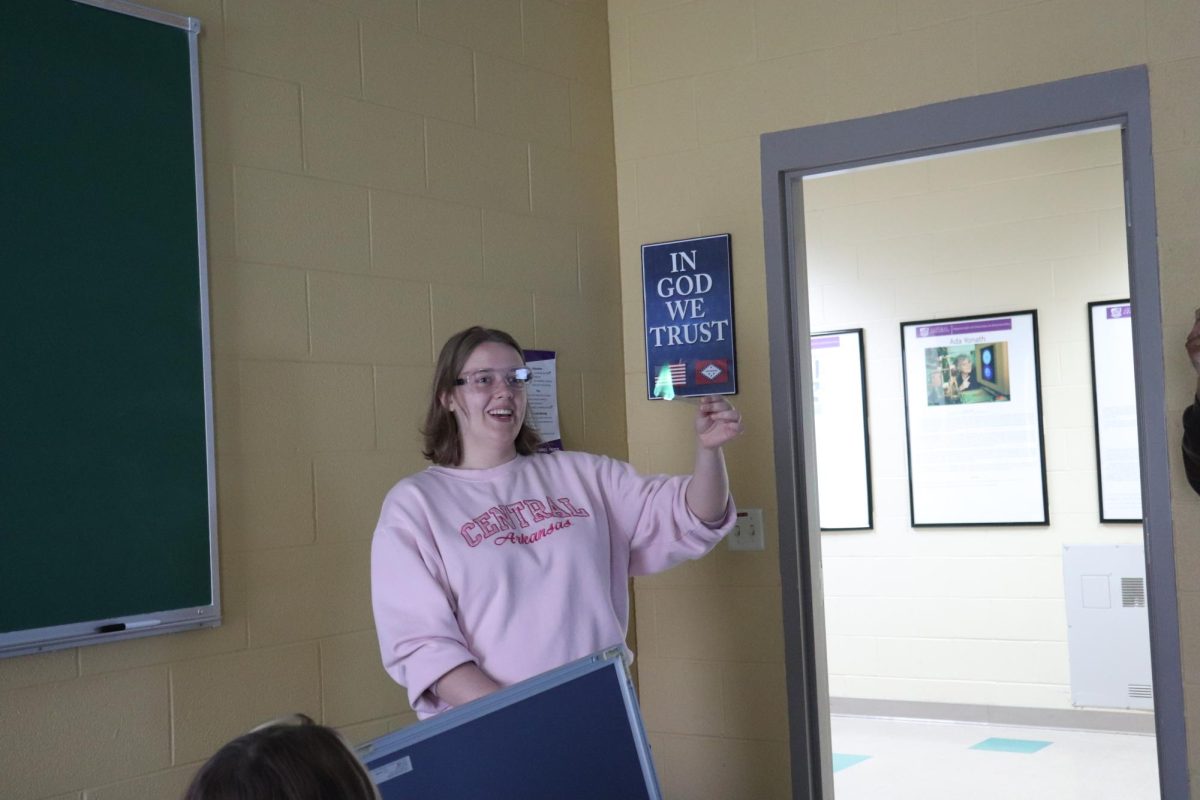
The Biology Club invited Newton to share his photography with students for an Oct. 5 presentation at Lewis Science Center.
Newton displayed magnified photos of frogs, lizards, bugs and more, all taken from his cabin which he lovingly calls “Frogwarts,” a derivation of “Harry Potter’s” Hogwarts.
Ruth Houston, Biology Club president and a friend of Newton said, “I think it’s just important to know that no matter what you do in life or where you go in life, there’s always a way to creatively express yourself.
“Biology doesn’t just have to be the research that you do. It’s art; it’s beauty, and I think that Mr. Newton really encapsulates that and I wanted to share that with campus and students,” Houston said.
Newton said that he was introduced to nature photography in 1978 when he bought his first camera before going on a trip out west.
Newton, who said he had always had an interest in the outdoors and camping, initially started photographing scenery, traveling to the Grand Tetons and Grand Canyon.
Newton said he got into macro photography around the same time that Frogwarts was built in 2005.
Now 18 years later and equipped with a headlamp, a spotlight, a Canon SX50 and a homemade diffuser made of a coat hanger and a plastic bag, Newton photographs an hour before sunrise, getting up close and personal with the creatures he happens upon.
He also hosts an email thread titled “Field Notes from Frogwarts” where he shares pictures and educational commentary with subscribers.
Houston said, “I got on the wonderful email chain of ‘Field Notes from Frogwarts’ and I opened up my first one and I was just so shocked and so taken aback [by] the details [and] the information. He taught me things that I didn’t even know from biology … just the time and research that goes into this is just amazing.”
Newton said that one reason he does photography is to see what he can learn about the surrounding nature.
“You just never know what you’re going to find. That’s the thing, I use this as a way to learn,” Newton said.
“It’s not just the photos, I research the stuff as best as I can. I mean, I don’t have any biology degrees or anything. I guess a budding naturalist is the best description for me,” Newton said.
“I don’t always know what the subject is when I’m shooting it but when I get through, I get a good image of it and find out what I can about these things.”
Besides getting to learn more about the creatures he photographs, Newton said that macro photography has allowed him to see the world around him differently, even when not looking through a lens.
“I trained my eye to see things that I would have never seen 15 years ago and to do that you have to take it slow,” Newton said.
“I found [that] if all you need to do to fill your frame is find something great looking [and] as big as my little finger, it’s always there if you know how to look close if you know how to spot it,” he said.
“I really enjoy just sitting out there waiting, watching nature change,” Newton said.
Biology Club’s next event will be a Jewel Moore Nature Reserve clean up on Oct. 29 from 2 p.m. to 3:30 p.m.