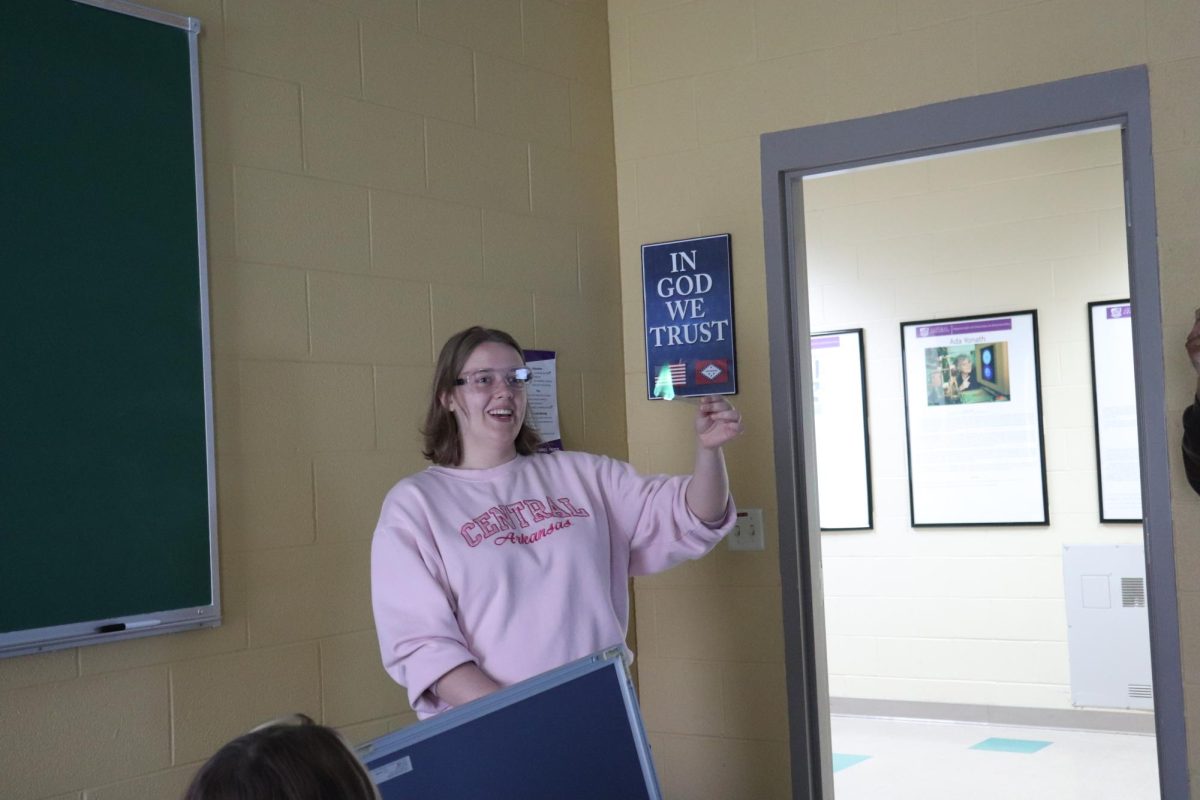




Green Bears gathered in the Lewis Science Center to discover the true meaning of sustainability, make some new connections and enthuse about aspects of conservation.
Brittany Jones, Green Bear Coalition’s graduate assistant, said the meeting came about after she discovered some coalition members were unclear about the meaning of sustainability.
Jones said many people believe that sustainability means keeping things as they are and maintaining the ability to continue the world exactly as it is.
She argued this belief contradicts the concept’s actual meaning, which is avoiding “the depletion of natural resources in order to maintain an ecological balance.”
“We have to improve if we want the world to be here for future generations,” Jones said, arguing that the world’s current depletion of resources is not possible in the long term.
Environmental science major and sophomore Ridge Julian offered watershed maintenance as an important step in improving the environment.
“If you don’t have [a] watershed then lands can erode, and that means not just things like roads for us — but land for crops,” Julian said.
Jones agreed, noting that trees without deep taproots will instead spread their roots, making erosion dangerous for the tree and nearby structures and roads.
Jones said, “You have a tiny bit of erosion and a tree that weighs probably worth 10 elephants falls over. And that’s anytime it storms — which, you gotta think about tropical environments. It storms a lot.”
Jones asked participants to name things people think are sustainable but aren’t — with the first answer being recycling.
“Recycling is not sustainable,” Jones said. “Not saying we shouldn’t recycle, because yes, we should recycle. But it’s not a sustainable practice. Sustainability means everything you’re putting into it, you’re getting out of it.”
Jones said that when you recycle plastic bottles, for instance, chemicals are used to break it down and are released into the environment.
“You’re not getting all the plastic that you put in, back out,” she said.
The group then discussed ways to help the environment without adding chemicals or creating more waste like a recycling plant does.
Julian introduced the idea of purifying water laden with heavy metals via unique and native plants.
Julian said he was particularly interested in “helping environments naturally recover without literally taking in, pumping the water and purifying it.”
“But rather introducing certain plants that naturally have high copper resistance that are able to take [copper] up and expel it naturally into the environment, nullified,” Julian said.
Jones then touched on consumerism and the cost of buying goods, specifically short-use products like makeup.
“It’s hard to think about everything we do has an impact. And we don’t want to stop living our lives,” Jones said. “If you want to wear makeup every day — that is fantastic. But we just have to find other ways we can offset our carbon footprint.”
Jones invited attendees to join the Green Bear Coalition on its gardening days, where they tend to the group’s plants in the Lewis Science Center Atrium.
To get more information about the group, visit its Instagram @greenbearcoalition.