


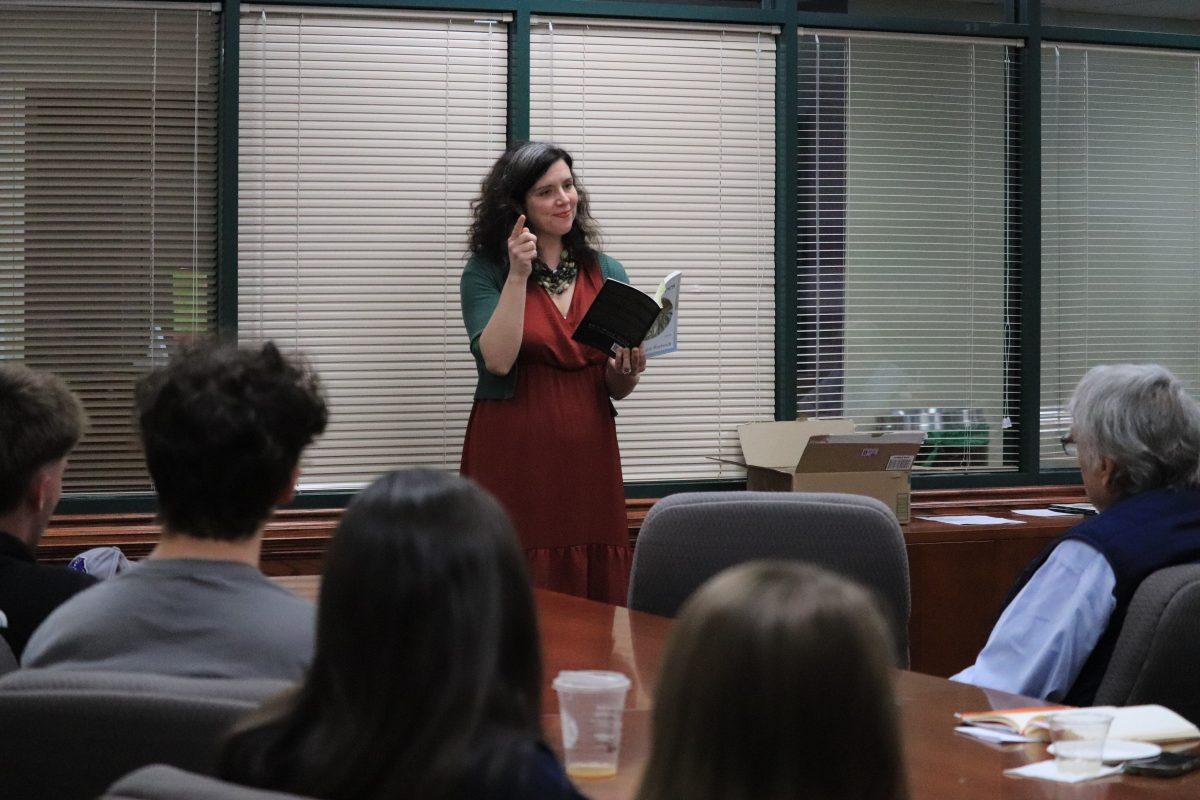
Katie Hartsock, the 2025 Phillip H. McMath Post-Publication Book Award winner, visited Win Thompson Hall to receive her award and discuss her poetry book, “Wolf Trees.”
The McMath Award, founded in 2016, promotes recently published books and authors.
During her craft talk and reading on Feb. 27, Hartsock explained that a wolf tree is an old tree that outlives the rest of the forest and often stands alone, a metaphor she used throughout her book to symbolize her experiences with motherhood and her diagnosis of type 1 diabetes.
“No matter where it stands or how it stands, it’s a leftover from what was there before,” Hartsock said.
McMath presented Hartsock her award at the reading. He said, “Literature has to serve a value that transcends the context.”
“This is what I have done with wolf trees, making a similarity between two dissimilar things,” Hartsock said, “A diabetic and a wolf tree, a mother’s body and a wolf tree.”
Hartsock, an acclaimed author and Oakland University professor described her work as “splendid and severe.”
As she read from her book, Hartsock’s powerful delivery guided the audience through the raw emotions and deeply personal themes woven into her poetry.
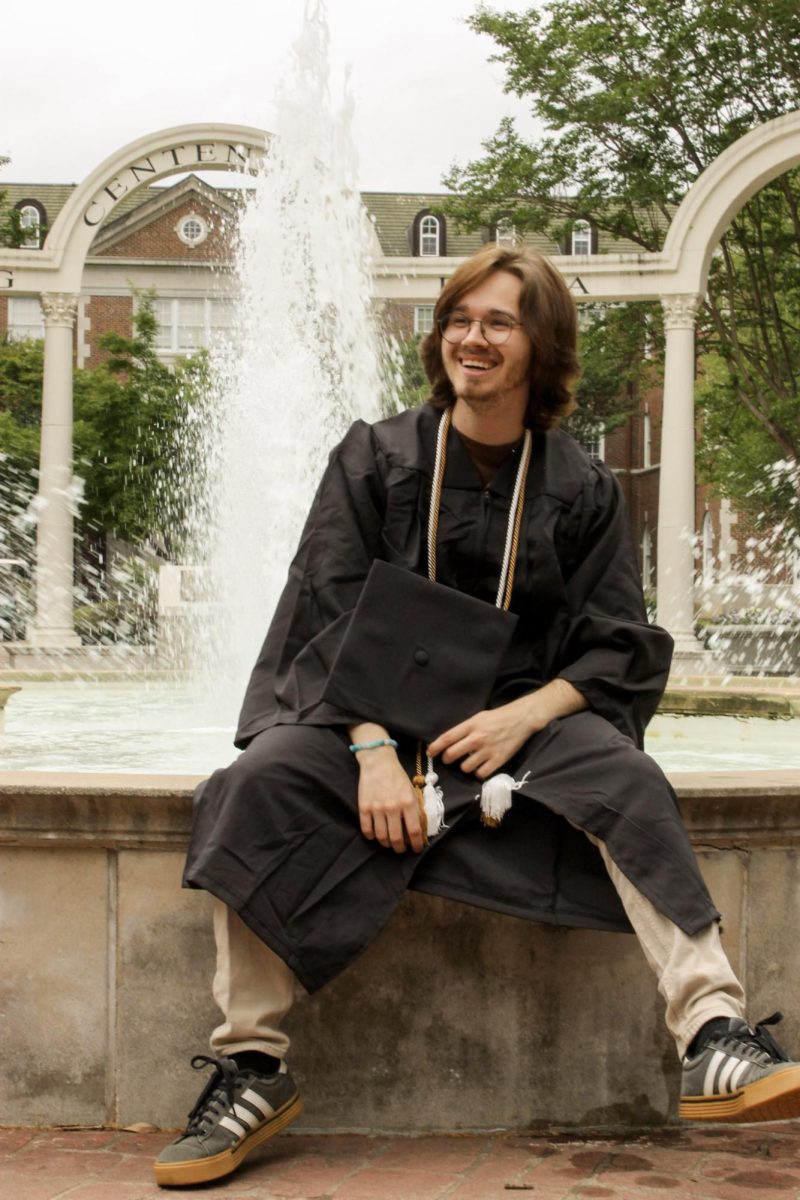
“There’s definitely an emotional difference listening to a poet; you get to hear how they envisioned their writing,” said sophomore and English major Cayden Hansen.
”Especially with Katie today, she was very expressive, so it invokes different emotions — maybe not more, but different.”
During her craft talk, Hartsock shared copies of some of her favorite poems, which she drew inspiration from, as gifts for aspiring writers.
She also discussed how she used the technical aspects of poetry to navigate her storytelling.
”Poems and form still invite the chaotic, but I do think that there is a way of making music and a rhythm out of what otherwise feels shapeless,” Hartsock said.
Her insights resonated with the audience, including students who reflected on the complexities of crafting meaningful poetry.
“I feel like poetry seems easy to do when you think about it, but it actually isn’t. It takes a really good poet to make a poem mean something,” Feather Chokbengboun, a senior and psychology major, said, “Poetry puts a twist on hard topics and makes them easier to digest, I think poetry’s twists and turns make it more enjoyable.”
Brian Larsen, visiting lecturer of English at UCA, emphasized the transformative power of poetry.
“For me, poetry has perhaps the greatest potential to help all of us wrestle with what it means to live, to be uncertain, to be,” Larsen said.
Hartsock said her poems tackle difficult topics in an emotional rather than upfront way.
She explained that this approach can help new poets create compelling narratives without getting bogged down in details.
“The idea is a big mansion, and the front door is writing, but sometimes, if you walk around the mansion, there is a side door that leads you inside,” Hartsock said.
Hartsock delved into the themes of her work and how personal experiences shape her poetry.
“I like how poetry makes it easier to convey the emotions behind vulnerable topics,”
Chokbengboun said. “It really opened my eyes to start looking at not only poetry but life through a side door.”
Hartsock sold and signed copies of “Wolf Trees,” which included thoughtful notes and gratitude to her readers for their support and connection with her work.