



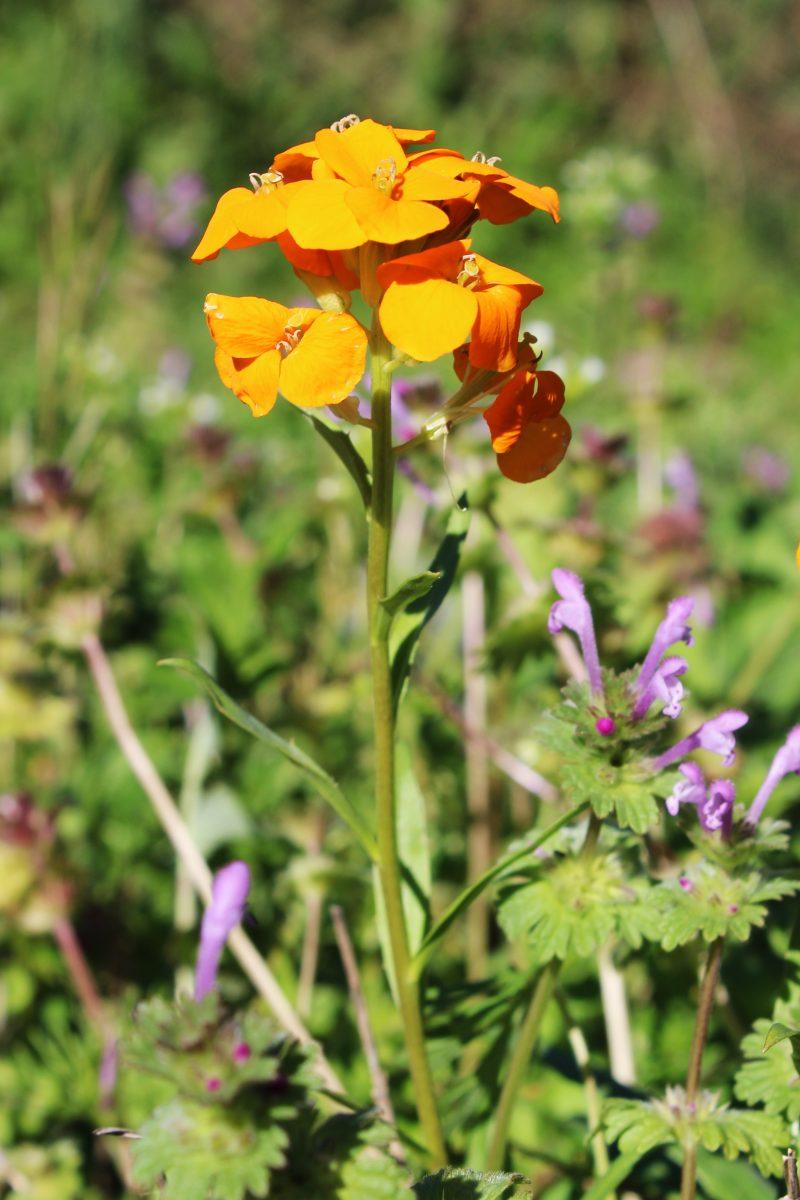
The Faulkner County Library is planting seeds to feed and educate the community. With its seed cart and community garden, the library is sowing the foundation of gardening education for its patrons.
Ammie Gilson, assistant circulation manager, has worked hands-on with the garden and the seed cart.
“It’s really helpful, especially teaching our younger community where our food comes from and that you can do it yourself,” Gilson said. “I think that’s a huge benefit. We’ve had schools tour, and it’s been really a big hit for a lot of students that don’t even know that most of our food is grown.”
Gilson said the seed cart started four years ago and has been a staple in the library ever since.
“The idea is that just like a book, a patron can check out seeds,” she said. “Then the theory behind it is if you grow your own fruit, you would save the seeds and then return them back to the library — it’s not required, but that’s generally how it would work.”
Similarly, patrons can check out plots in the community garden.
“These 4-by-4 plots are all numbered and patrons can check them out,” Gilson said. They agreed to take care of their plot, and they agreed to do four hours of community service in the garden monthly, like packing seeds or pulling weeds.
“They can grow whatever they want. It’s up to them if they want to keep their own produce or a lot of times we’ll donate it to a food bank,” she said.
Bauer Lee, an intern at the library, volunteers his time helping with the community garden and seed packing.
Lee said he decided to get involved with the garden after taking a conservation psychology class.
“I liked the idea of trying to get people involved with nature for all the different benefits with mental health and well-being, how it can improve humans’ well-being and nature’s well-being as well,” Lee said. “I wanted to try to get a job that included nature. Initially, I was hoping to use social justice to try to make nature more accessible to underrepresented communities.”
Lee, who is a student at Hendrix, said volunteering at the library would be beneficial for any student looking to gain volunteer hours.
“As for working outside, it’s just really nice. I think this area is really beautiful — all the different nature sounds, it can be really relaxing and therapeutic,” he said. “When I have worked outside, it’s been nice to feel my body get tired, just knowing that I’m really getting put to work.”
Gilson said her biggest advice to patrons or volunteers interested in growing a garden is to never give up.
“I like to educate people on growing their own food and then it’s okay to make mistakes,” she said. “Just because something works well for someone else doesn’t mean it will work for you; it’s finding your own rhythm basically. I enjoy just teaching the community that we can do great things.”
Library Director John McGraw said the garden was originally created by the three Conway colleges as a competition of who could grow the most produce.
“Now it’s kind of a teaching space, because if you think about it, growing your own food is a proficiency that used to be lots of people had and now people don’t so much,” he said. “There are people in Conway who live through food deserts, where it is a very long distance from where they live to where they can get fresh produce — but you can grow a tomato, you can grow herbs in your window, we’ve got a seed library here. So you can basically get seeds for anything to grow at your home here at the library.”
More information about the community garden or the seed cart can be found at conway.fcl.org or by visiting the library at 1900 Tyler St.