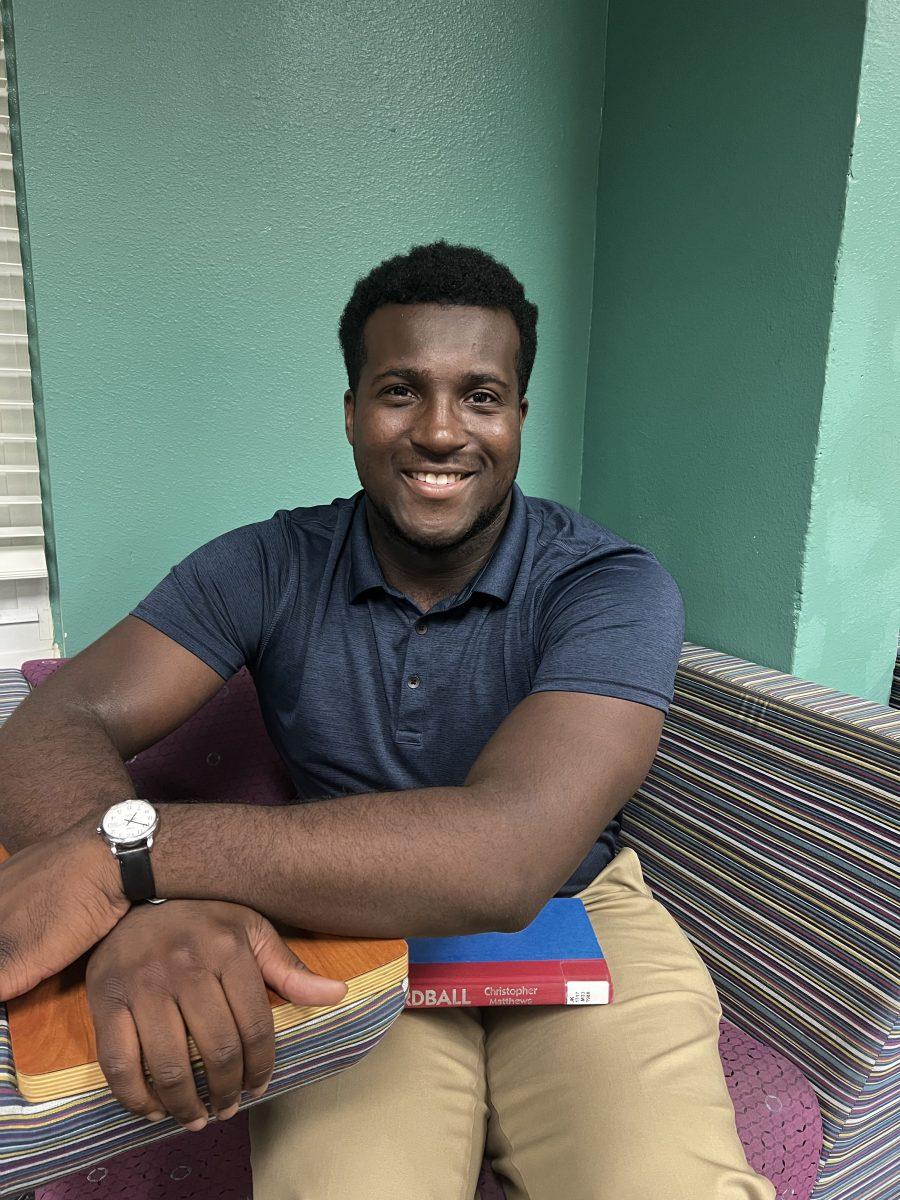





Wesley Ivy is a senior with a Bachelor’s in Spanish working on his Masters degree and teaches a Spanish I class at UCA.
Ivy took three years of Spanish in highschool, but his goal wasn’t to master the language at first.
“I actually had no desire to learn Spanish! Instead of taking Spanish I in high school, I signed up for an EAST [Educated Accelerated by Service and Technology] class which turned out horribly. Although I had always wanted to learn a second language, Spanish was not on my radar; for whatever reason, I wanted to learn Portuguese, German or Russian,” Ivy said. “After switching out of the EAST class, I ended up in Spanish I and realized that I loved the language. I would love to study another language- perhaps Catalan for its proximity to Spanish. I’ve also taken a go at Swedish, but never practiced with actual speakers, so I’ve forgotten most of it.”
Ivy stumbled upon his love for the Spanish language as if it were fate. Beginning with his dislike for an EAST class, It wasn’t until college that he really began to understand the language without translating it in his head first.
“It’s impossible to pinpoint when I no longer felt the need to translate in my head what I was reading or hearing, but I believe it happened in Spanish II. Once I got familiar with the vocabulary and the structure of the language, it became easier to understand the language without comparing it to English first,” Ivy said.
Ivy participated in the study abroad program, living in Madrid from early January to March.
“The university we went to in Spain had a listing of various apartments available to rent for students. I got in contact with one of the people who was renting out a few rooms, believing we would be living with other students. When we arrived at the address, we were greeted by the mother of the person I had contacted. Essentially, we lived with a host family without ever meaning to,” Ivy said. “Being in Spain helped my learning tremendously- I cannot articulate everything I learned, both having to do with the language and the culture, in just two and a half months. I did feel much more confident in my speaking abilities upon returning home.”
Ivy is not yet done with his education in Spanish, and has advice for those who want to pursue a second language.
“The first thing I would tell someone who is trying to learn a second/foreign language is to get the word ‘fluent’ out of their vocabulary. I’m not sure if there is an accurate and all-encompassing definition for the various connotations that ‘being fluent in a language’ can have. If you can do complex mathematics in French but struggle to hold a conversation about the weather, you’re certainly fluent in one complicated aspect of the language, but maybe not in a way that is beneficial outside of that particular context,” Ivy said.
Ivy also explained that what works best for him is to never go a day without experiencing the target language. Ivy suggested recognizing words you don’t know yet and studying them until they’re stuck in your brain.